SEO Title Tag: AC Repair Qatar: 9 Warning Signs Your System Needs Immediate Attention Meta Description: Spot the warning signs your AC needs repair before it fails in Qatar’s heat. Covers split AC, central AC, and commercial systems plus when to call a professional. URL Slug: /blog/ac-repair-qatar-warning-signs
!["AC repair technician servicing split AC unit in Qatar"]](https://granerqatar.com/wp-content/uploads/2026/06/image-50-1024x683.png)
In most countries, a struggling air conditioner is an inconvenience. In Qatar, where outdoor temperatures regularly cross 45°C between June and September, it’s closer to a safety issue. A unit that’s losing capacity doesn’t just make a room less comfortable it can leave a home, office, or server room dangerously exposed during exactly the months you can least afford it.
The problem is that most AC failures don’t happen suddenly. They send warning signs for days or weeks before the system actually stops cooling. Knowing what those signs look like and which ones mean “call someone today” versus “keep an eye on it” is the difference between a same-week repair and a multi-day breakdown in peak summer.
Quick answer: The clearest signs an AC unit needs immediate repair in Qatar are warm air from the vents, unusual noises like grinding or hissing, rapidly rising Kahramaa electricity bills, water pooling around the indoor unit, and an AC that switches on and off repeatedly without reaching the set temperature. Any one of these on its own justifies a same-week inspection; two or more together mean don’t wait.
[INTERNAL LINK: “HVAC Maintenance Contractor” → https://granerqatar.com/hvac-maintenance-contractor/]
1. The Air Coming Out Isn’t Actually Cold
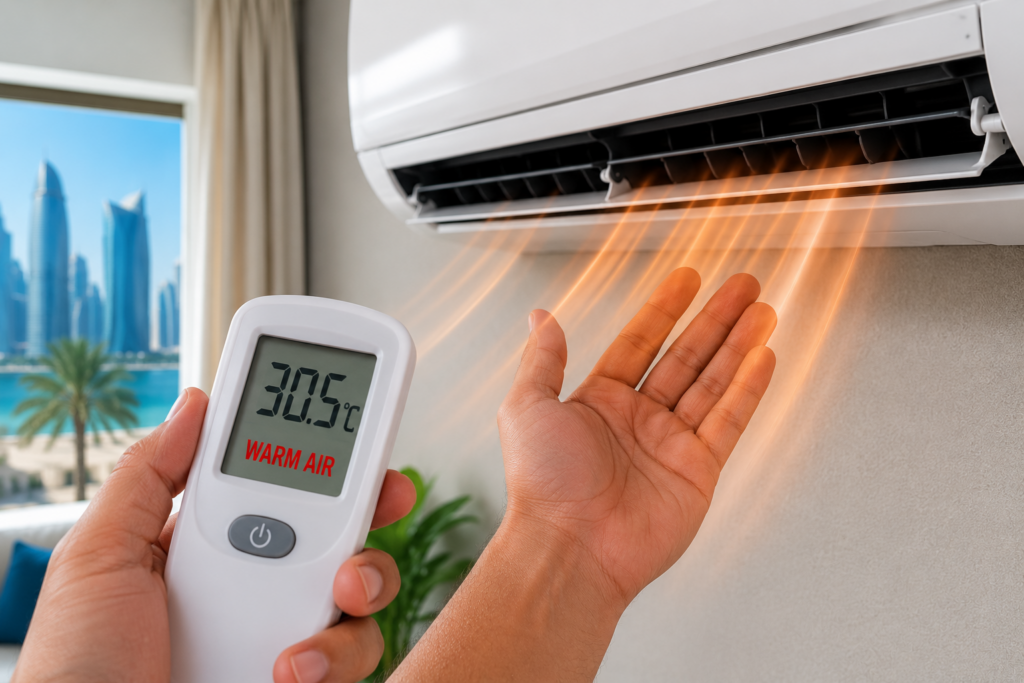
This is the sign people notice first and act on last — they assume it’ll “catch up” once it’s been running a while. In Qatar’s heat, a unit blowing room-temperature or warm air is almost always either a refrigerant leak, a failing compressor, or a frozen evaporator coil restricting airflow. None of those resolve on their own, and running a low-refrigerant compressor for days at a stretch is exactly how a repairable issue turns into a unit that needs full replacement.
2. Unusual Noises From Indoor or Outdoor Units
A healthy AC is close to silent. Grinding or screeching usually points to worn motor bearings; clanking or rattling often means a loose fan blade or panel; a hissing sound can mean refrigerant escaping through a leak; a buzzing noise frequently traces back to an electrical connection issue inside the unit. None of these noises are “normal wear” they’re a component already failing, and the noise is just the first symptom.
3. Rising Electricity Bills With No Other Explanation
Kahramaa bills climb every summer as a baseline, but a sharp, unexplained jump especially compared to the same month last year almost always means the compressor is working harder to deliver the same cooling. Dirty filters, low refrigerant, and a struggling compressor all force the system to run longer cycles to hit the same setpoint, and that inefficiency shows up directly on the bill before it shows up as a breakdown.
4. Weak or Inconsistent Airflow Between Rooms
If one bedroom feels fine while the living room never quite cools down, the cause is usually blocked vents, a clogged filter, leaking ductwork, or in villas and apartments with central systems a unit that’s undersized for the space it’s covering. This is also one of the more common complaints in older Doha apartments where ducting wasn’t sized correctly for current AC capacity.
[INTERNAL LINK: “Building/& Tower Facility Management” → https://granerqatar.com/hvac-maintenance-contractor-2/]
5. Musty, Burning, or Chemical Odors
A musty smell usually means mold or moisture buildup inside the unit or ductwork — common in Qatar’s humidity spikes during the shoulder seasons. A burning smell is more serious: it typically points to an overheating electrical component or motor and warrants switching the unit off and calling a technician rather than waiting. A sharp chemical odor can indicate a refrigerant leak, which needs a professional regardless of how minor it seems.
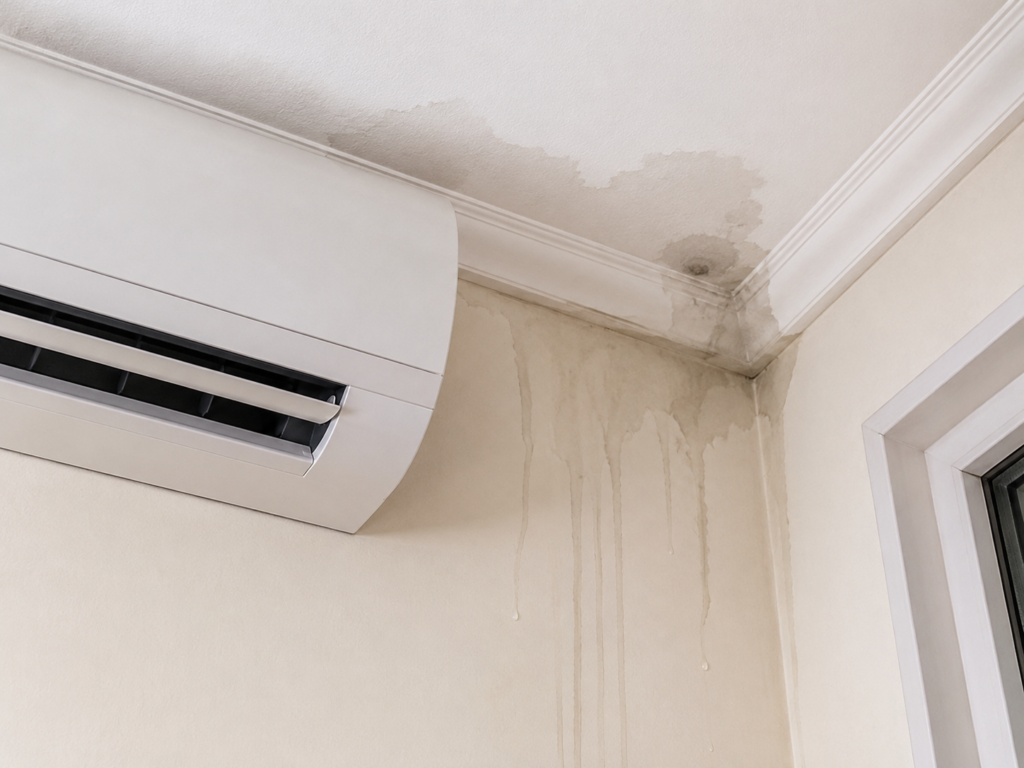
6. Water Leaking or Pooling Around the Unit
Indoor units that drip or pool water are usually dealing with a blocked condensate drain line, a cracked drain pan, or — particularly relevant in Qatar’s high-humidity months a frozen coil that’s now thawing and overflowing the drain pan’s capacity. Left alone, this becomes ceiling stains, damaged flooring, or mold growth behind walls, which costs far more to fix than the AC repair itself.
7. The Unit Won’t Stop Cycling On and Off
Short cycling where the AC starts, runs briefly, shuts off, then restarts within minutes is hard on every component in the system and is rarely caused by just one thing. It can stem from a dirty filter restricting airflow, a refrigerant leak, a failing thermostat sensor, or an oversized unit that satisfies the thermostat too quickly. Whatever the cause, every cycle adds wear, so this is a “fix this week” sign, not a “monitor it” one.
8. Thermostat Display or Response Problems
A blank thermostat display, a thermostat that doesn’t change room temperature when adjusted, or one that seems to read the wrong temperature entirely can be a dead battery — or it can be a wiring fault between the thermostat and the unit. Either way, an unreliable thermostat means the system isn’t actually responding to what you’re asking it to do, which in Qatar’s summer is not something to leave unresolved.
9. The Unit Is Past 10 Years Old
Qatar’s climate is harsher on AC equipment than most units here run far more hours per year than in temperate countries, and that accelerates wear on compressors, coils, and seals. A system over a decade old that’s showing any of the signs above is usually past the point where repair makes long-term financial sense; at that age, a Split AC Repair Qatar callout often costs more over a year than simply replacing the unit with a more efficient one.
[INTERNAL LINK: “Split & Window AC Supply, Installation & Commissioning” → https://granerqatar.com/hvac-maintenance-contractor-3/]
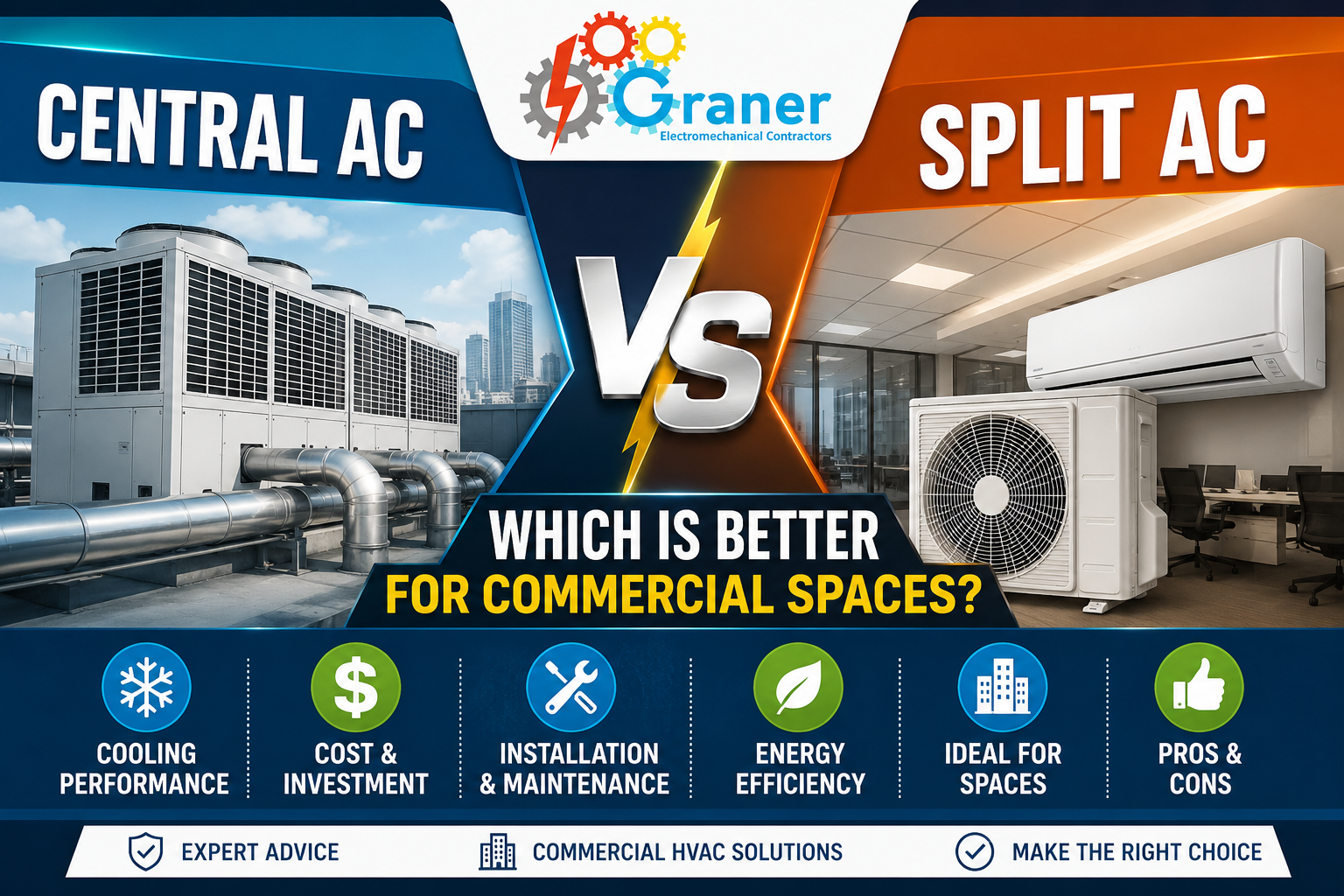
Split AC Repair vs. Central AC Repair in Qatar — What’s Different
Most homes and small offices in Qatar run on split units, while towers, commercial buildings, and larger villas often run central or VRF systems. Split AC Repair Qatar issues tend to be isolated and fast to diagnose one unit, one indoor/outdoor pair, a contained fault. Central system issues are more involved because a single fault (a failing compressor, a refrigerant leak in shared piping, a control board issue) can affect cooling across multiple zones or floors at once, and diagnosing it usually means involving someone who understands the building’s full HVAC layout, not just the unit in front of them.
AC Maintenance Qatar: Preventing the Next Emergency Call
Most of the signs above don’t appear out of nowhere they’re what happens when routine AC Maintenance Qatar gets skipped for a season or two. A basic preventive schedule catches the majority of these issues before they become an “immediate repair” situation:
- Filter cleaning or replacement every 4–6 weeks during peak summer months
- Coil cleaning (both indoor and outdoor) every 3 months Qatar’s dust load clogs coils faster than most climates
- Refrigerant level and pressure check twice a year
- Drain line and condensate pan inspection before the humid shoulder seasons
- Electrical connection and capacitor check annually, since heat-driven wear hits electrical components hardest
[IMAGE 4 — Technician cleaning an AC coil or filter, tools visible. Alt text: “Preventive AC maintenance service in Qatar”]
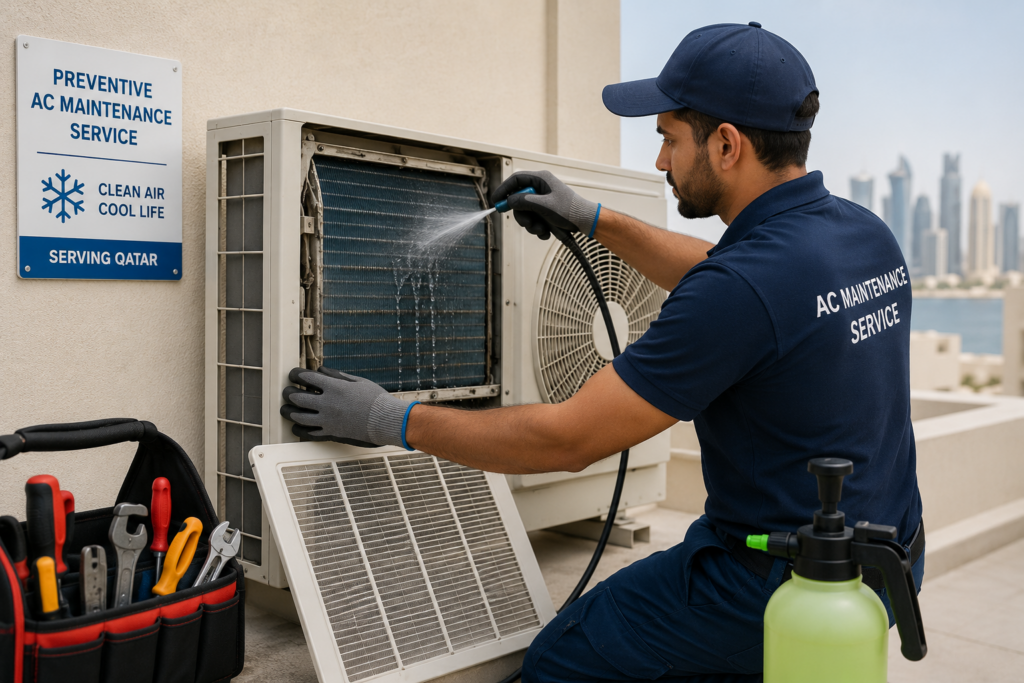
Buildings and villas under an Annual Maintenance Contract (AMC) typically see far fewer emergency callouts than those relying on reactive repair, simply because problems get caught at the filter-and-coil stage instead of the compressor-failure stage.
How Graner Supports AC Repair and Maintenance Across Qatar
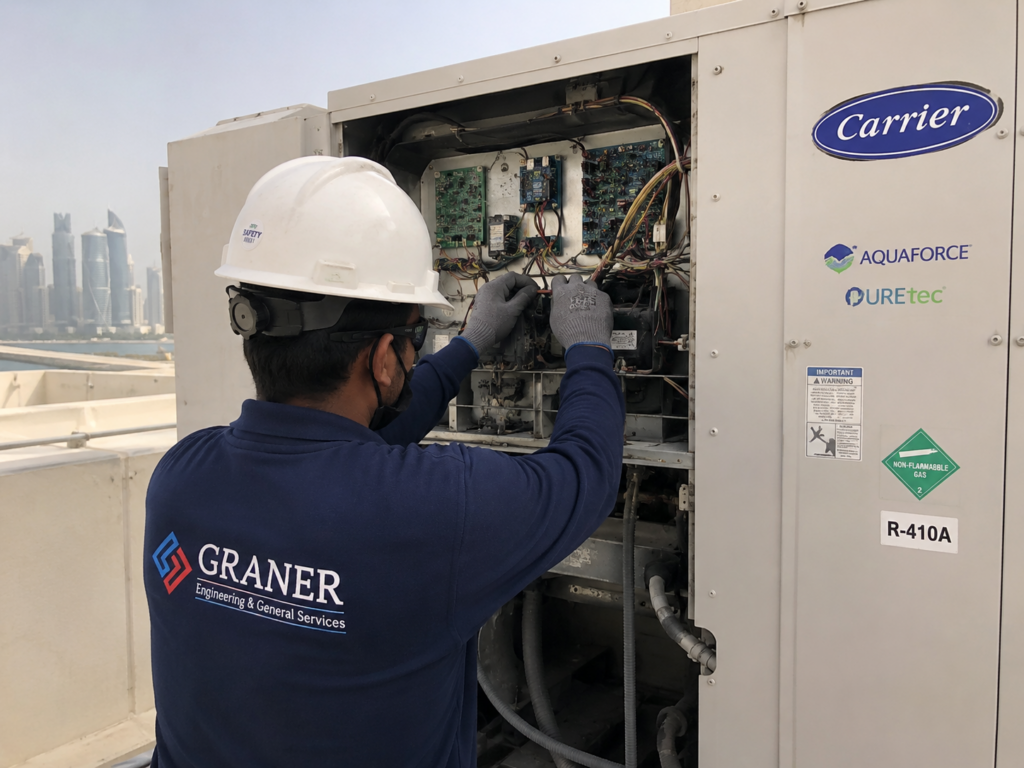
Graner handles AC Service Qatar work across residential, commercial, and industrial properties in Doha — from split and window unit supply, installation, and commissioning, to ongoing HVAC maintenance contracts for towers and facility-managed buildings. If your unit is showing any of the signs above, the same team that runs scheduled maintenance on commercial towers can diagnose and repair residential and small commercial units just as quickly.
[INTERNAL LINK: “About Graner” → https://granerqatar.com/graner-website/]
[CTA Button: Book an AC Inspection Today] → link to https://granerqatar.com/contact-us-2/
Frequently Asked Questions
How often should I service my AC in Qatar? Most homes and offices in Qatar should have AC units professionally serviced at least twice a year once before peak summer and once after with filter cleaning done more frequently in between. Units running continuously, such as in server rooms or commercial spaces, often benefit from quarterly checks instead.
Can I fix AC problems myself, or do I need a professional? Simple tasks like replacing filters, clearing visible vent blockages, and checking thermostat batteries are safe to do yourself. Anything involving refrigerant, electrical components, or the compressor should go to a licensed technician attempting these without training risks further damage and can void manufacturer warranties.
How do I know if I need an AC repair or a full replacement? As a general guide, if the unit is under 8 years old and the repair cost is reasonable relative to a new unit, repair usually makes sense. If the unit is over 10 years old, has needed multiple repairs in the past year, or uses an older refrigerant type, replacement is often the more cost-effective choice long-term.
What’s the most common cause of AC failure in Qatar specifically? Dust and heat are the two biggest factors. Qatar’s airborne dust clogs filters and coils faster than most climates, while sustained high temperatures push compressors and electrical components to run near their limits for months at a time a combination that accelerates wear far beyond what the same unit would experience elsewhere.
Is emergency AC repair available the same day in Qatar? Many AC service providers in Doha, including teams running active maintenance contracts, can offer same-day or next-day response for urgent issues like total cooling failure, especially during peak summer months when demand for emergency repairs is highest though response times vary by provider and how booked their schedule is that day.