Facility management in Qatar is the single most important operational decision you will make as a property owner. Not because of what it costs but because of what it prevents. A well-managed building retains its value, keeps tenants happy, stays on the right side of Qatar’s regulatory requirements, and costs significantly less to run over time than a building managed reactively.
Qatar’s facility management market is valued at USD 8.98 billion in 2026 and growing at 12.29% annually. This is not a market growing because of paperwork it is growing because property owners are learning, often the hard way, that professional facility management is not optional in this climate and this regulatory environment.
This guide gives you everything you need to understand facility management in Qatar what it is, what it includes, what it costs, how it differs from property management, and what to look for when choosing a provider.
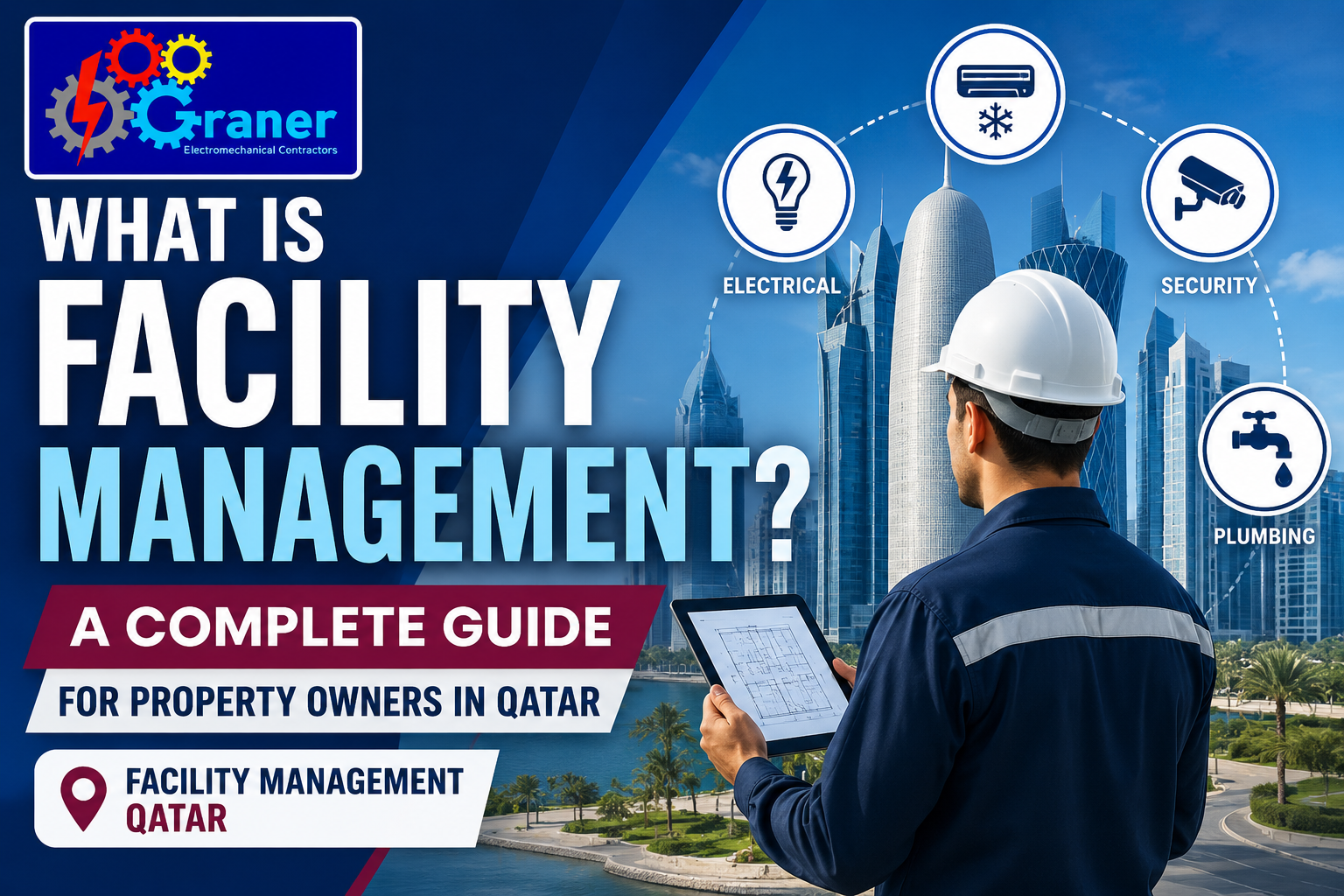
What is Facility Management?
Facility management (FM) is the integrated, ongoing management of a building’s physical systems, infrastructure, and services ensuring that the property operates safely, efficiently, and in compliance with all applicable regulations.
The International Organization for Standardization (ISO) defines it as “an organizational function which integrates people, place, and process within the built environment to improve the quality of life of people and the productivity of the core business.”
For a property owner in Qatar, this means one thing practically: every system in your building HVAC, electrical, plumbing, fire protection, lifts is being maintained, monitored, and managed proactively so that nothing fails unexpectedly, nothing falls out of compliance, and nothing costs you more than it should.
Professional facility management is not a luxury for large developments. It is a structured, cost-effective approach that applies equally to a single apartment building in Najma, a commercial office block in West Bay, or an industrial warehouse in Mesaieed.
What Does Facility Management Include in Qatar?
Facility management services in Qatar are typically divided into two categories: hard services and soft services.
Hard Services — The Technical Backbone of Your Building
Hard services are tied directly to the building’s physical infrastructure. These are the systems that, if they fail, immediately affect safety, comfort, and occupancy. In Qatar’s climate and regulatory environment, these are non-negotiable.
HVAC system operation and maintenance — In Qatar, HVAC is not a seasonal concern. It is a year-round critical system. With summer temperatures regularly exceeding 45°C, an HVAC failure is a health and safety event, not just a comfort issue. Preventive HVAC maintenance includes filter cleaning, refrigerant checks, coil inspections, thermostat calibration, and duct assessments — carried out on a scheduled basis to prevent failures before they happen.
Electrical systems maintenance. Routine inspection, testing, and maintenance of distribution boards, wiring, lighting systems, and backup power. Electrical faults are the leading cause of building fires in Qatar.
Plumbing and mechanical systems Drainage, water supply, pumping systems, and sanitary installations require regular inspection and maintenance to prevent failures, leaks, and water damage.
Fire protection systems Qatar Civil Defence (QCD) mandates that fire pumps, sprinkler systems, and fire suppression equipment are regularly inspected, tested, and maintained. Non-compliance is a legal liability with serious consequences, including building shutdowns.
MEP (Mechanical, Electrical, and Plumbing) integrated maintenance In modern commercial and residential buildings in Qatar, MEP systems are deeply interconnected. A specialist MEP contractor managing these systems together rather than separate vendors managing each in isolation delivers better performance, lower costs, and fewer coordination failures.
Building fabric and structural maintenance Facades, roofing, waterproofing, internal finishes, and structural elements require periodic inspection and proactive maintenance, especially given Qatar’s dust, humidity, and thermal expansion cycles.
Generator and standby power systems Critical for commercial and high-rise properties in Doha, where power interruptions require immediate backup activation.
Soft Services -The Operational Layer
Soft services support the daily functioning of the building and directly affect tenant experience and satisfaction.
Cleaning and janitorial services
Pest and vector control particularly important in Qatar given the climate
Landscaping and grounds maintenance
Security and access control management
Waste management and disposal
Energy monitoring and utility management
Health, safety, and environmental (HSE) compliance administration
Administrative and front-of-house support
For most property owners in Qatar, the priority is hard services particularly HVAC, MEP, and fire safety. These are the services that carry regulatory risk and have the highest financial impact when neglected.

Generic facility management content found online was written for temperate climates with light regulatory environments. Qatar is neither. Here is why facility management in Qatar demands a different level of seriousness.
Why Facility Management in Qatar is Different from Anywhere Else
The Climate is Unforgiving
Qatar’s summers push ambient temperatures above 45°C, with humidity levels along the coast making heat index values even higher. This places mechanical systems under extraordinary stress. HVAC units that would last 15 years in a European climate may reach end-of-life in 8–10 years in Qatar without proper maintenance. Condensate drainage systems, outdoor compressors, and refrigerant levels require more frequent attention than any global standard would suggest.
A structured preventive maintenance programme in Qatar is not about following best practice it is about protecting systems that are operating at the edge of their design parameters for 5–6 months of the year.
Qatar’s Regulatory Requirements Are Real and Enforced
Qatar has a clear and enforced regulatory framework for building operations. Property owners need to understand the key bodies and their requirements:
Qatar Civil Defence (QCD) governs all fire protection systems. Fire pump maintenance, sprinkler testing, and fire suppression systems must comply with QCD standards. Non-compliant properties face inspection failures and mandatory shutdowns.
Ashghal (Public Works Authority) governs sewage treatment, drainage, and infrastructure compliance. Any property with STP systems or major drainage infrastructure must maintain Ashghal-compliant operations.
Qatar’s electricity and water authority sets standards for electrical installations and metering that must be maintained throughout the building’s operational life.
Qatarisation Law No. 12 of 2024 enforced from April 2025, this legislation introduced workforce obligations that affect how FM contractors staff and deploy their teams. Working with a compliant, established FM provider protects you from indirect liability.
GSAS (Global Sustainability Assessment System) increasingly embedded in Qatar’s building codes, particularly for newer commercial and mixed-use developments. Energy and water performance are now regulatory considerations, not just sustainability goals.
Qatar National Vision 2030 is Reshaping FM Expectations
Qatar’s long-term development roadmap places sustainability at the centre of infrastructure planning. For property owners, this means energy efficiency, water conservation, and reduced carbon impact are not optional extras they are increasingly built into building codes and expected by corporate tenants evaluating commercial space in Doha.
An FM provider that tracks energy consumption, identifies inefficiencies, and implements improvements is not just adding value it is future-proofing your asset against regulatory tightening and tenant expectations. Facility Management vs. Property Management What’s the Difference?
This is one of the most common points of confusion for property owners in Qatar.
Property management is commercial and relational. It covers lease agreements, rental collection, tenant communications, vacancy management, and portfolio strategy. A property manager works on behalf of the owner to maximise the financial return from the asset.
Facility management is technical and operational. It covers the physical health of the building maintaining systems, ensuring regulatory compliance, managing service vendors, and keeping infrastructure in safe working condition.
Both are needed. But they are not interchangeable. A property manager cannot replace a qualified facility management contractor. The technical demands of building operations in Qatar’s climate and regulatory environment require dedicated electromechanical expertise that property management firms are not structured to provide.
For many property owners in Qatar, the mistake is assuming that their property management arrangement covers facility management. It typically does not at least not to the depth that hard services and compliance management require.
Some larger property owners and developers in Qatar maintain in-house FM teams. For most property owners particularly those managing one to several buildings outsourcing to a specialist FM contractor is the more practical and cost-effective approach.
Here is a direct comparison:
In-House FM: Higher fixed overhead (salaries, training, equipment), full control over teams, suitable for large portfolios with predictable daily maintenance volumes, requires significant HR and compliance management.
Outsourced FM:
Lower fixed costs, access to specialist expertise across multiple disciplines (HVAC, MEP, fire systems), flexible response capacity, structured AMC pricing, and a single point of accountability. More practical for most property owners in Qatar.
The most effective outsourcing arrangement is a comprehensive Annual Maintenance Contract (AMC) with a qualified FM contractor covering all critical hard services with defined visit frequencies, response time SLAs, and full documentation.
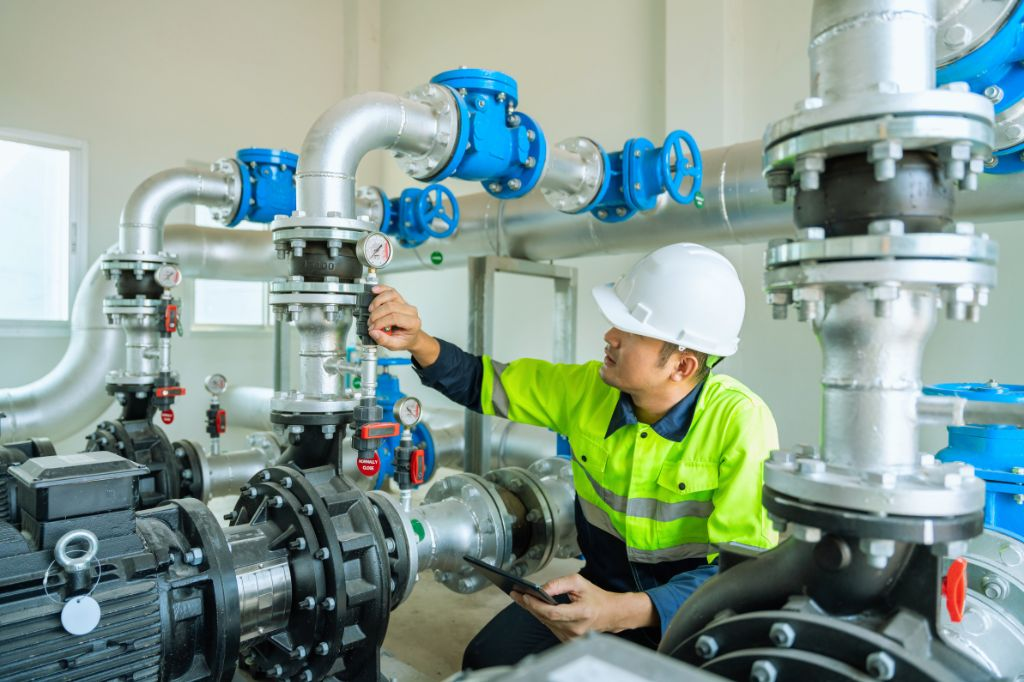
An Annual Maintenance Contract is the standard service structure used by facility management companies in Qatar to deliver structured, predictable building maintenance.
A well-constructed AMC defines: the exact scope of services covered, scheduled visit frequencies for each system, emergency response time commitments (typically 2–4 hours for critical systems), documentation and reporting requirements, and clear escalation procedures.
For property owners in Qatar, an AMC covering HVAC, electrical, plumbing, and fire systems is the most practical way to ensure your building is maintained properly without managing multiple contractors, scheduling visits manually, or waiting for systems to break before acting.
Good AMC providers will also include condition reports after each visit, giving you visibility into the health of your assets and allowing you to plan capital expenditure before it becomes urgent.to Choose the Right Facility Management Company in Qatar
This is where most property owners get it wrong. Price should not be the primary selection criterion. The cheapest FM company in Qatar is often the most expensive over a 3-year period, once you account for reactive repairs, compliance failures, and system deterioration from inadequate maintenance.
Evaluate any FM company in Qatar against these criteria:
Local Qatar experience and regulatory knowledge do they understand QCD, Ashghal, Kahramaa, and GSAS requirements? Can they provide QCD-compliant fire system maintenance? Do they have documented experience in Qatar, not just Gulf-region generalisations?
Certified technical workforce are their engineers and technicians certified in the systems they maintain? Are they HSE-trained? Do they hold relevant qualifications for MEP and HVAC work in Qatar?
MEP and electromechanical depth buildings in Qatar require serious technical expertise in mechanical, electrical, and plumbing systems. A generalist cleaning and soft services contractor is not the right choice for hard service management.
24/7 emergency availability in Qatar’s climate, a system failure at 11 PM on a Thursday needs a response, not a voicemail.
Transparent AMC structure can they provide a clear, itemised contract with defined visit frequencies, response times, and escalation procedures? Are pricing and inclusions/exclusions unambiguous?
Documentation and reporting every visit, inspection, and remedial action should be formally documented. This protects you legally and gives you the data to plan future capital expenditure.
Proven project track record ask for references from comparable properties. A company managing a commercial tower in West Bay is a different proposition from one that has only done apartment cleaning in Wakra.
FAQ: Facility Management Qatar — Questions Answers
What does facility management in Qatar typically cost?
For most residential and commercial buildings in Doha, a comprehensive AMC covering HVAC, MEP, and fire systems typically represents 1–3% of the building’s annual replacement value. This is a fraction of what reactive maintenance costs when systems fail. Always compare AMC pricing on a like-for-like scope basis a lower price that excludes critical services is not a saving.
Is facility management legally required in Qatar?
Specific elements are legally required. QCD mandates regular fire pump and fire suppression system maintenance. Electrical and MEP systems in commercial and high-rise buildings are subject to inspection requirements. Ashghal compliance is mandatory for STP facilities. A licensed FM contractor ensures you meet these obligations without having to track regulatory requirements yourself.
What is preventive maintenance and why does it matter in Qatar?
Preventive maintenance is scheduled, planned servicing of building systems before failures occur. In Qatar, it is critical for HVAC (which operates under extreme load), fire systems (which must be QCD-compliant), and electrical infrastructure. Preventive maintenance reduces emergency repair costs, extends equipment lifespan, keeps energy consumption lower, and maintains warranty validity.
How do I know if my building needs facility management services?
If your building is managed reactively meaning you call a contractor when something breaks you are already overpaying and under-managing. Any occupied building in Qatar with HVAC, electrical, plumbing, and fire systems needs a structured maintenance programme. The question is not whether you need FM services, but whether your current arrangement is adequate.
What is the difference between hard services and soft services in Qatar FM?
Hard services relate to the physical systems and infrastructure of the building: HVAC, electrical, plumbing, MEP, fire protection, and structural maintenance. Soft services relate to operations and occupant experience: cleaning, security, pest control, landscaping, and waste management. Both categories matter, but hard services carry the greater regulatory risk and financial impact if neglected.
Can facility management help reduce energy costs in Qatar?
Yes. A significant proportion of operational costs in Qatar buildings is energy primarily driven by HVAC load. Properly maintained HVAC systems consume 15–25% less energy than poorly maintained equivalents. An FM provider that monitors energy performance and optimises system settings can deliver measurable cost savings over a full annual cycle.
Graner Electromechanical Contractors — Facility Management Services in Qatar
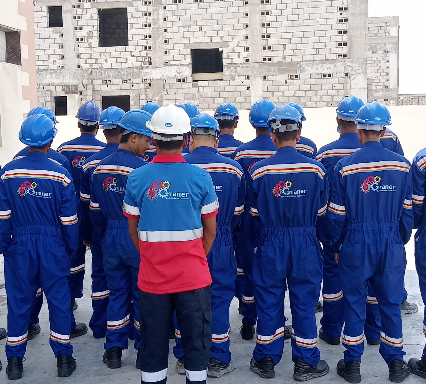
Graner Electromechanical Contractors is a Doha-based MEP engineering and facility management company serving commercial, residential, and industrial properties across Qatar. We are not a generalist FM firm — we are electromechanical specialists, which means the technical depth that matters most for hard service management is built into everything we do.
Our facility management services are structured around what Qatar’s property owners actually need: preventive HVAC maintenance that keeps systems running through the harshest summers, QCD-compliant fire pump inspection and maintenance, MEP systems management by certified technicians, 24/7 emergency response capability, and fully documented AMC programmes with transparent pricing and clear SLAs.
We have delivered facility management and MEP maintenance services for a wide range of properties and projects across Qatar, including:
Dukhan Tower HVAC, Electrical, and Plumbing Annual Maintenance Contract
Heir of Khalil Real Estate HVAC AMC for multiple apartment buildings across Doha
M Power Mesaieed Power Plant supply of maintenance electricians since 2013, ongoing
SUEZ Doha West Sewage Treatment Plant operation team, five-year engagement from 2026
BMJV Falcon 5 US Base maintenance technicians, electricians, HVAC and mechanical technicians
Our team works across residential towers, commercial office buildings, industrial facilities, warehouses, and mixed-use developments throughout Doha and Qatar.
If your building is not being managed with the level of technical rigour that Qatar’s climate and regulatory environment demands, we would like to talk to you.
Ready to Protect Your Property with Professional Facility Management in Qatar?
A building managed properly costs less, performs better, and holds its value longer. A building managed reactively costs more every year in emergency repairs, compliance penalties, tenant turnover, and accelerating asset deterioration.
Graner Electromechanical Contractors provides structured, reliable facility management services for property owners across Qatar. Whether you need a comprehensive AMC, HVAC maintenance, QCD-compliant fire system services, or full building facility management, we have the team, the experience, and the local knowledge to deliver it properly.
📞 Call us now: +97444366836
📍 Visit us: No. 203, Barwa Commercial Avenue, Arkan Gate 23, 2nd Floor, Doha, Qatar
🌐 Get in touch: Click here