The Short Answer: More Often Than You Think
If you live in Qatar or the UAE, your HVAC system works harder than almost any other system in the world. Temperatures regularly exceed 45°C (113°F) in summer, humidity spikes along coastal areas, and sandstorms dump fine dust into every filter and coil. The HVAC service frequency that works in Europe or North America simply does not apply here — and following the wrong schedule is one of the costliest mistakes Gulf residents make.
So what is the correct HVAC service frequency for Qatar and UAE? At a minimum, twice a year — ideally once before the summer cooling season (March–April) and once after it (October–November). For commercial buildings, large villas, or systems running 24/7, a quarterly HVAC service frequency is strongly advised to prevent premature breakdowns and efficiency loss.
Understanding the right HVAC service frequency for your specific system and property type is not just about comfort — it directly impacts your energy bills, indoor air quality, and the lifespan of your equipment. This guide breaks down exactly what that schedule should look like, why Qatar’s extreme environment makes it non-negotiable, and what happens when you skip it.
Why Qatar’s Climate Demands a Different HVAC Service Frequency
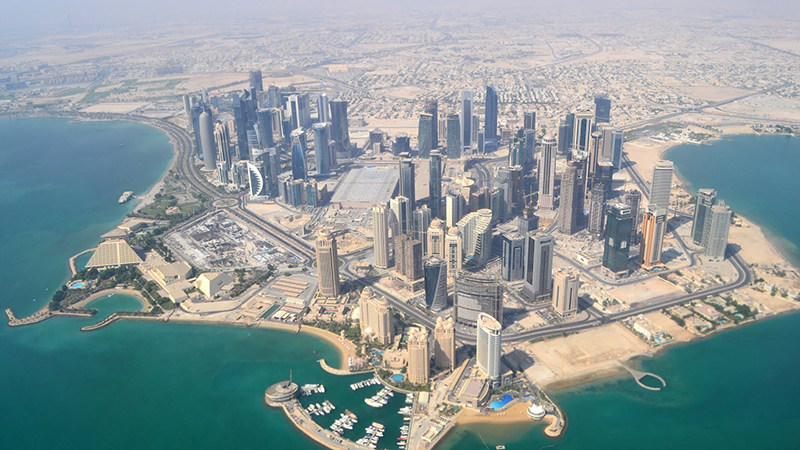
Most HVAC manufacturers design their maintenance schedules around temperate climates. Qatar and the UAE are anything but temperate.
Extreme Heat Load: Your AC unit in Doha or Dubai runs for 8 to 10 months of the year, compared to 3 to 4 months in a country like Germany. That’s nearly triple the operational hours, which means parts wear out faster, refrigerant degrades sooner, and filters clog more quickly.
Desert Dust and Sand: The Gulf region experiences frequent dust storms (locally called “haboob”). Fine particulate matter penetrates outdoor condenser units and air intakes, coating coils and motors in a film that reduces efficiency by 15–20% even after a single heavy storm.
High Humidity in Coastal Areas: Doha, Abu Dhabi, and Dubai sit on the Gulf coast. During spring and autumn, relative humidity can exceed 90%. This creates the perfect environment for mould, mildew, and bacterial growth inside air handlers and ductwork — a direct risk to indoor air quality.
Hard Water Scale: Water used in evaporative cooling and chiller systems in Qatar has a high mineral content. Without regular descaling, limescale builds up on heat exchangers and coil surfaces, dramatically reducing cooling capacity.
These four factors combined mean that following a Western HVAC maintenance schedule in Qatar is like changing your car’s oil once a year while driving 50,000 kilometres. The maths simply does not work.
Recommended HVAC Service Frequency in Qatar and UAE: A Month-by-Month Guide
March – April: Pre-Summer Service (Critical)
This is the most important service of the year. Before the extreme heat of May through September, your system must be in peak condition.
What should be done:
- Full inspection and cleaning of condenser coils
- Refrigerant level check and top-up if required
- Cleaning or replacement of air filters
- Inspection of electrical connections and contactors
- Lubrication of fan motors and moving parts
- Thermostat calibration
- Ductwork inspection for leaks or blockages
- Drainage pan and condensate drain cleaning
Skipping the pre-summer service is the single most common cause of mid-summer AC breakdowns in Qatar. Emergency call-out rates triple between June and August simply because units that were already struggling enter peak load season without a service.
October – November: Post-Summer Service (Highly Recommended)
After running at maximum capacity for four to five months, your HVAC system is under significant wear. A post-summer service identifies damage caused during the peak season before it becomes a costly repair.
What should be done:
- Inspection for refrigerant leaks after summer stress
- Cleaning of evaporator coils (mould and scale accumulation)
- Air quality check and duct sanitation
- Filter deep-clean or replacement
- Outdoor unit inspection for dust and debris buildup
- Check and reset thermostat and control systems for winter heating mode
Monthly DIY Checks (Between Professional Services)
Professional servicing does not replace what homeowners and facility managers should do themselves monthly:
- Check and clean or replace air filters — In Qatar, this should happen every 3 to 4 weeks, not every 3 months as packaging often recommends. Dusty environments clog filters fast.
- Clear the area around outdoor units — Remove dust, leaves, and debris from around condenser units.
- Check for unusual noises or smells — Burning smells, rattling, or reduced airflow are early warning signs.
- Inspect condensate drain pipes — Blocked drains cause water damage and mould growth within days in humid conditions.
HVAC Service Frequency by System Type in Qatar
Not all HVAC systems have the same maintenance needs. Here is a breakdown relevant to common systems used across Qatar and the UAE:
Split Air Conditioners (Residential)
Recommended frequency: Every 6 months (professional), monthly filter cleaning (DIY)
Central HVAC / Ducted Systems (Villas and Apartments)
Recommended frequency: Every 3 to 6 months (professional), monthly filter checks (DIY)
Chiller Systems (Commercial Buildings)
Recommended frequency: Quarterly professional service, monthly monitoring checks
VRF/VRV Systems (Offices, Hotels)
Recommended frequency: Every 3 months, given high-duty cycles in commercial environments
Fresh Air Handling Units (FAHUs)
Recommended frequency: Monthly filter changes, bi-annual deep service
Packaged Rooftop Units
Recommended frequency: Every 3 months — rooftop units are exposed directly to the sun and sand, accelerating wear
Signs Your HVAC System Needs Servicing Now (Not Later)
In Qatar’s climate, waiting for a scheduled service date when warning signs appear can turn a simple fix into a full system replacement. Watch for these:
Reduced Cooling Performance: If your thermostat is set to 20°C but the room feels like 26°C, your system is losing efficiency — usually from dirty coils or low refrigerant.
Higher Electricity Bills: A poorly maintained HVAC system in Qatar can consume 20 to 40% more electricity than a well-maintained one. If your bills are climbing without a change in usage, your system needs attention.
Unusual Odours: Musty smells indicate mould in the ductwork or evaporator coil. Burning smells suggest electrical faults. Neither should ever be ignored.
Water Leaking from Indoor Unit: This signals a blocked condensate drain, which in humid Gulf conditions can cause ceiling and wall damage within hours.
Frequent On/Off Cycling (Short Cycling): If the unit keeps switching on and off without completing a cooling cycle, it may indicate a refrigerant problem, oversized system, or compressor fault.
Ice Forming on the Unit: Counter-intuitive in Qatar’s heat, but ice on coils or refrigerant lines signals restricted airflow or low refrigerant — both requiring immediate professional attention.
What Happens When You Skip HVAC Servicing in Qatar?
This is not theoretical. Here are the documented consequences of poor HVAC service frequency in the Gulf region:
Compressor Failure: The compressor is the most expensive component in any AC system. Running a dirty, low-refrigerant system in 45°C+ heat burns out compressors. A compressor replacement can cost 40 to 60% of the price of a new unit.
Indoor Air Quality Degradation: Mould spores, bacteria, and allergens build up in unserviced ductwork. In sealed, heavily air-conditioned buildings common in Qatar, residents recirculate contaminated air — linked to respiratory issues, allergies, and sick building syndrome.
Energy Waste: Qatar and the UAE have some of the highest per-capita electricity consumption in the world, largely driven by cooling. A poorly maintained HVAC system running 10 months a year generates enormous unnecessary costs.
Voided Warranty: Most HVAC manufacturers require documented annual or bi-annual servicing to maintain warranty validity. Skipping services may mean you pay full price for repairs that would otherwise be covered.
Full System Breakdown Mid-Summer: Emergency HVAC repair in July in Qatar is both expensive and difficult. Technicians are in high demand, parts may need to be ordered, and living without AC in 48°C heat is a health emergency — especially for children, the elderly, and anyone with respiratory conditions.
How to Choose a Reliable HVAC Service Provider in Qatar
Given that HVAC servicing is non-negotiable in this climate, choosing the right provider matters.
Look for Accredited Technicians: Reputable providers in Qatar employ technicians certified under international standards such as ASHRAE or the Refrigeration and Air Conditioning Engineer (RACE) qualification.
Check for Qatar Civil Defence Compliance: Commercial HVAC systems must comply with Qatar Civil Defence regulations. Ensure your provider is familiar with local codes, especially for fire-rated ductwork and commercial air handling.
Ask About Service Contracts (AMC): Annual Maintenance Contracts (AMC) are widely available in Qatar and UAE. These lock in a set number of visits per year at a fixed cost, often with priority emergency response included. For busy households and businesses, an AMC is nearly always more cost-effective than one-off call-outs.
Verify They Service Your Brand: Qatar’s market includes Daikin, Carrier, Trane, LG, Samsung, Gree, and many others. Confirm your technician has experience with your specific brand and model.
Request a Detailed Service Report: After every visit, you should receive a written report of what was inspected, what was found, and what was done. This documentation is important for warranty purposes and for tracking your system’s health over time.
HVAC Service Frequency: Qatar vs UAE — Are There Differences?
Qatar and the UAE share broadly similar climate conditions, but there are some nuances:
Qatar (Doha): The inland desert environment means dust storms are frequent and severe. Coastal humidity in Doha is high for most of the year. Pre-summer servicing is absolutely critical, and monthly filter changes are more important here than almost anywhere else in the world.
Dubai (UAE): Dubai’s urban heat island effect means temperatures near ground level in dense urban areas can be even higher than the official readings. High-rise buildings with centralised chiller systems require very different servicing schedules than the villa-style split AC systems common in residential Qatar.
Abu Dhabi (UAE): Abu Dhabi’s proximity to the empty quarter desert means dust loading on outdoor units is extreme. Rooftop condenser units in Abu Dhabi may need cleaning every 6 to 8 weeks during peak dust season.
In both countries, the fundamentals are the same: the HVAC service frequency must be higher than international defaults, professional servicing should happen at least twice yearly, and monthly user maintenance is not optional — it is essential.
Cost of HVAC Servicing in Qatar: What to Expect
Understanding typical costs helps residents and businesses budget appropriately and avoid being overcharged.
Residential Split AC Service (Single Unit): QAR 80 to QAR 200 per unit depending on size and provider
Full Villa HVAC Service (Central System): QAR 500 to QAR 1,500 depending on the number of zones and system complexity
Annual Maintenance Contract (AMC) for a 3-Bedroom Villa: QAR 800 to QAR 2,500 per year, typically covering 2 to 4 visits and priority emergency response
Commercial Chiller Service: QAR 2,000 to QAR 10,000+ depending on chiller capacity and scope of work
Emergency Call-Out (Summer): QAR 200 to QAR 500 call-out fee plus labour and parts — significantly more expensive than scheduled maintenance
The cost comparison is clear: two scheduled services a year at QAR 200 each costs QAR 400. A single emergency compressor replacement can cost QAR 2,000 to QAR 5,000 or more. Preventive maintenance is not an expense — it is an investment.
Frequently Asked Questions About HVAC Service Frequency in Qatar
How often should I service my AC in Qatar?
At a minimum, twice per year — once in March or April before summer, and once in October or November after summer. For commercial systems or units running continuously, quarterly servicing is recommended.
Can I service my AC myself in Qatar?
Homeowners can and should clean or replace filters monthly, clear debris from outdoor units, and check for visible issues. However, refrigerant handling, electrical inspection, coil cleaning, and duct sanitation require licensed technicians with proper equipment.
What is the best month to service my HVAC in Qatar?
March is the ideal month for the pre-summer service. This gives technicians time to identify and fix any issues before temperatures peak in May and June.
Does Qatar’s sandstorm season affect HVAC maintenance?
Yes, significantly. After a major sandstorm, outdoor condenser units should be inspected and cleaned even if a regular service is not due. Fine sand embedded in coil fins dramatically reduces efficiency.
How do I know if my AC needs refrigerant?
Signs include reduced cooling output despite the compressor running, ice on refrigerant lines, and hissing sounds from the unit. Only a licensed technician can check and recharge refrigerant — topping it up yourself is illegal without proper certification in Qatar and UAE.
Is an AMC worth it for my home in Qatar?
For most residents, yes. AMCs provide peace of mind, guaranteed service visits, and usually include priority support during peak summer — exactly when you cannot afford to wait days for a technician.
Quick Reference: HVAC Service Frequency Checklist for Qatar and UAE Residents
Monthly (DIY):
- Clean or replace air filters
- Clear outdoor unit of dust and debris
- Check condensate drain for blockages
- Listen for unusual noises
Every 6 Months (Professional Service):
- Full coil cleaning (evaporator and condenser)
- Refrigerant check
- Electrical inspection
- Thermostat calibration
- Duct inspection
- Drainage system flush
After Every Major Sandstorm:
- Inspect and clean outdoor condenser coils
- Check air filters and replace if needed
Annually:
- Full ductwork sanitation
- Comprehensive system efficiency report
- Warranty documentation update
Conclusion: HVAC Service Frequency Is Not Optional in Qatar
Qatar and the UAE are among the most demanding environments on earth for HVAC systems. The combination of extreme heat, desert dust, coastal humidity, and near-year-round operation means that global maintenance guidelines simply do not apply here.
The right HVAC service frequency for Qatar residents is a minimum of twice yearly for residential systems, quarterly for commercial systems, and monthly DIY filter maintenance for everyone. Following this schedule protects your equipment, your health, your energy bills, and your wallet.
Do not wait for your AC to break down in the middle of July to take maintenance seriously. Schedule your pre-summer service in March, and your HVAC system will reward you with reliable, efficient cooling through even Qatar’s most brutal summers.
When it comes to professional HVAC servicing in Qatar, experience and reliability are everything — and that is exactly what Graner Qatar delivers. With a proven track record of maintaining residential and commercial HVAC systems across Doha and beyond, Graner Qatar understands the unique demands of the Gulf climate better than anyone. Their certified technicians bring the right tools, the right expertise, and a commitment to keeping your system running at peak performance — no matter how high the mercury climbs.
Whether you need a pre-summer deep service, an emergency call-out, or a comprehensive Annual Maintenance Contract tailored to your property, Graner Qatar is the trusted name Qatar residents and businesses rely on.
Do not leave your comfort — and your investment — to chance.
Visit granerqatar.com today to book your HVAC service and experience the Graner Qatar difference firsthand.