In Qatar’s climate, electrical systems don’t fail quietly. Ambient temperatures above 45°C, fine desert dust that works its way into every enclosure, and electrical loads that spike the moment the AC compressors kick in all push commercial wiring, panels, and switchgear harder than almost anywhere else in the world. A missed connection or an overheating breaker that might take years to cause a problem in a temperate climate can become a fire risk in Doha within months.
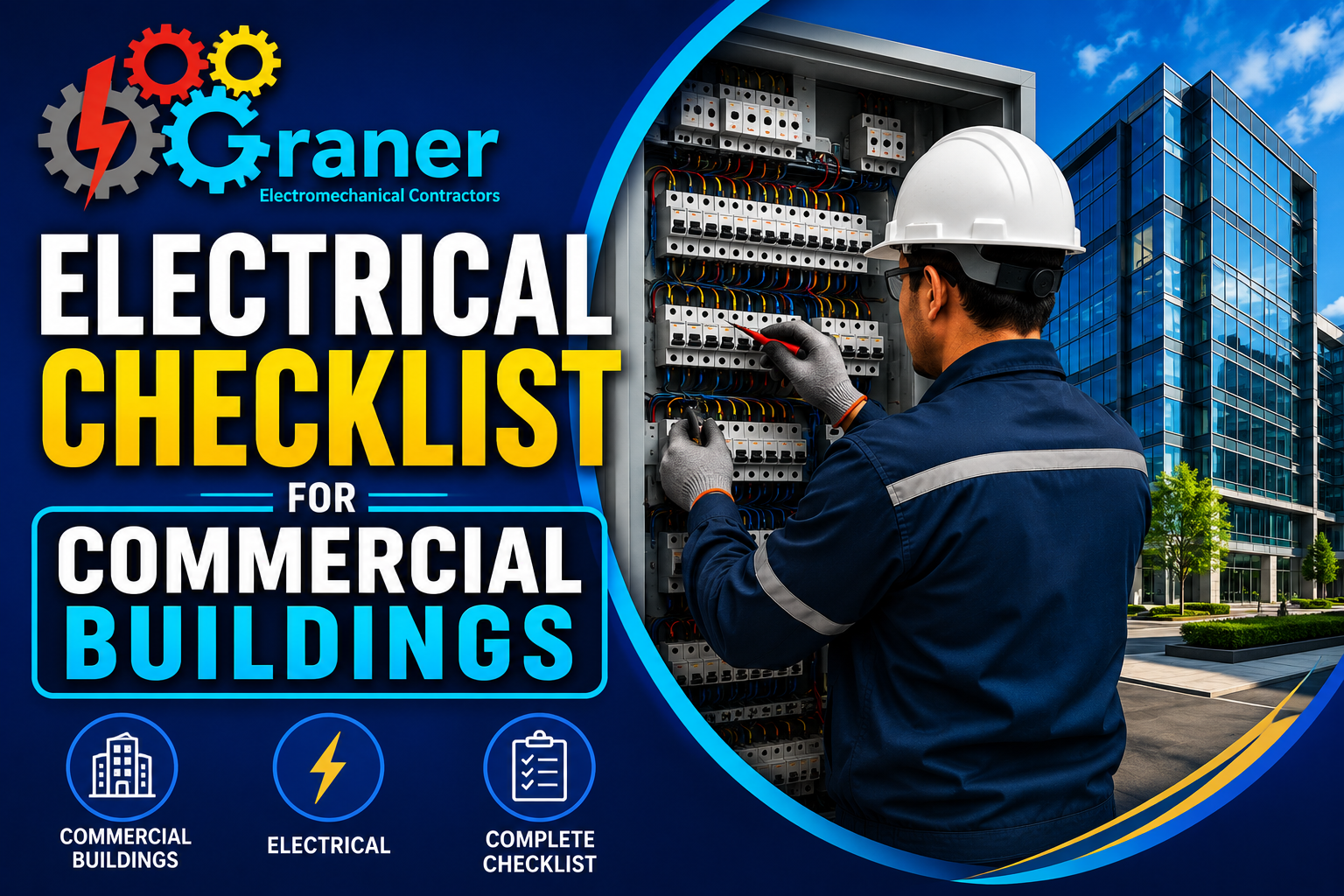
That’s exactly why every property manager, facilities engineer, or building owner in Qatar needs a working electrical checklist — not a vague reminder to “get the electrician in,” but a structured, repeatable inspection routine that catches problems before they become outages, fires, or insurance claims.
This guide gives you that checklist in full, explains how often each item should be checked, and shows where Qatar-specific compliance (Qatar Civil Defence, Kahramaa, NFPA 70B) fits into your maintenance program.
Why Commercial Buildings in Qatar Need This More Than Most
Three local realities make a structured electrical maihttps://granerqatar.com/top-7-electrical-issues-in-commercial-buildings-prevention/ntenance checklist non-negotiable here, rather than a nice-to-have:
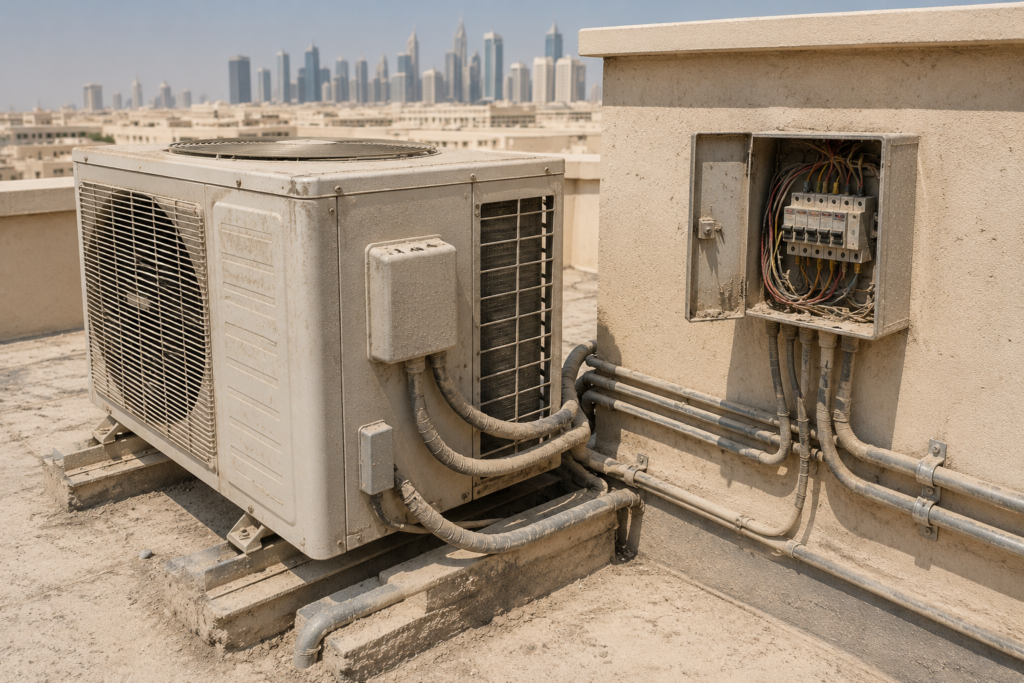
Heat load on panels and breakers. Qatar’s summer temperatures push HVAC systems to run almost continuously, which means distribution panels and breakers are carrying near-peak load for months at a time. Heat is the single biggest accelerant of electrical failure — every 10°C rise in operating temperature roughly halves the expected life of insulation and connections.
Dust and sand ingress. Fine particulate works into panel enclosures, junction boxes, and transformer vents faster in Doha than in most cities, creating tracking paths for arcing and blocking the ventilation that keeps equipment cool.
Regulatory exposure. Commercial and multi-tenant buildings in Qatar are expected to meet Qatar Civil Defence (QCD) life-safety requirements and Kahramaa’s electrical supply and metering standards. An undocumented system is a liability the moment an inspector or an insurer after a claim asks for maintenance records.
The Complete Electrical Checklist for Commercial Buildings
Break the checklist into these seven areas and you’ll cover everything an auditor, insurer, or Civil Defence officer expects to see.
1. Distribution Panels & Switchgear
- Inspect panel enclosures for corrosion, moisture intrusion, or dust buildup that could compromise insulation.
- Confirm panel doors close and lock securely, and that circuit directories/labels are accurate and legible.
- Look for discoloration, burn marks, or a faint burning smell — all signs of an overheating connection.
- Maintain the required clearance (typically 900mm/36″) in front of panels for safe access and airflow.
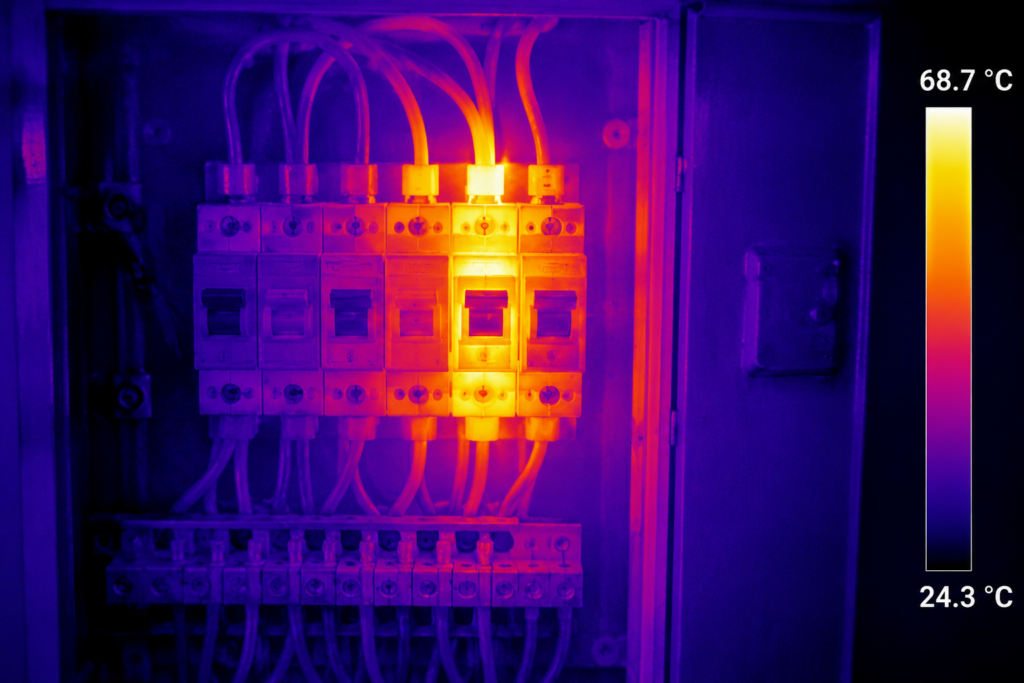
An annual infrared thermal scan is the single highest-value item on this entire list. It finds the loose lug or failing breaker that a visual inspection will miss completely, while the connection is still warm — not on fire.
2. Wiring, Cables & Terminations
- Check exposed cabling for cracked insulation, chafing, or rodent damage.
- Confirm cables are properly routed, supported, and clear of obstructions or standing water.
- Re-torque terminations to the manufacturer’s specified value; a connection that loosens from thermal cycling is one of the most common causes of commercial electrical fires.
3. Circuit Breakers, Fuses & Surge Protection
- Test breaker trip function rather than assuming age equals reliability.
- Replace fuses that blow repeatedly instead of simply swapping them out each time repeated failure points to an underlying fault.
- Inspect surge protection devices (SPDs) for indicator lights showing depletion, and replace expired units; Qatar’s grid is prone to voltage fluctuation during peak summer demand.
4. Grounding & Bonding
- Verify the building’s grounding system shows continuity and low resistance.
- Confirm all metal enclosures, conduit, and structural steel are properly bonded.
- This single category prevents the largest share of arc-flash and electric-shock incidents, so it deserves more attention than a quick visual glance.
5. Emergency & Backup Power Systems
- Run generators under load monthly to prevent “wet stacking” and confirm true capacity, not just startup.
- Test UPS battery discharge rates, not just whether the unit powers on.
- Verify the automatic transfer switch (ATS) actually transfers load during a simulated outage.
- Test emergency and exit lighting on the standard monthly 30-second / annual 90-minute cycle.
6. Lighting & Energy Systems
- Replace failing or flickering lamps and check ballasts/drivers for humming or leakage.
- Calibrate occupancy sensors and photocells so they’re saving energy without frustrating tenants.
- Where lighting is tied into a building management system, confirm it’s still talking to HVAC controls correctly a disconnected sensor quietly inflates the electricity bill for months before anyone notices.
7. Safety Devices & Compliance Documentation
- Test GFCI and AFCI devices on their built-in test buttons monthly.
- Confirm fire alarm and smoke detector interlocks with the electrical system are functioning.
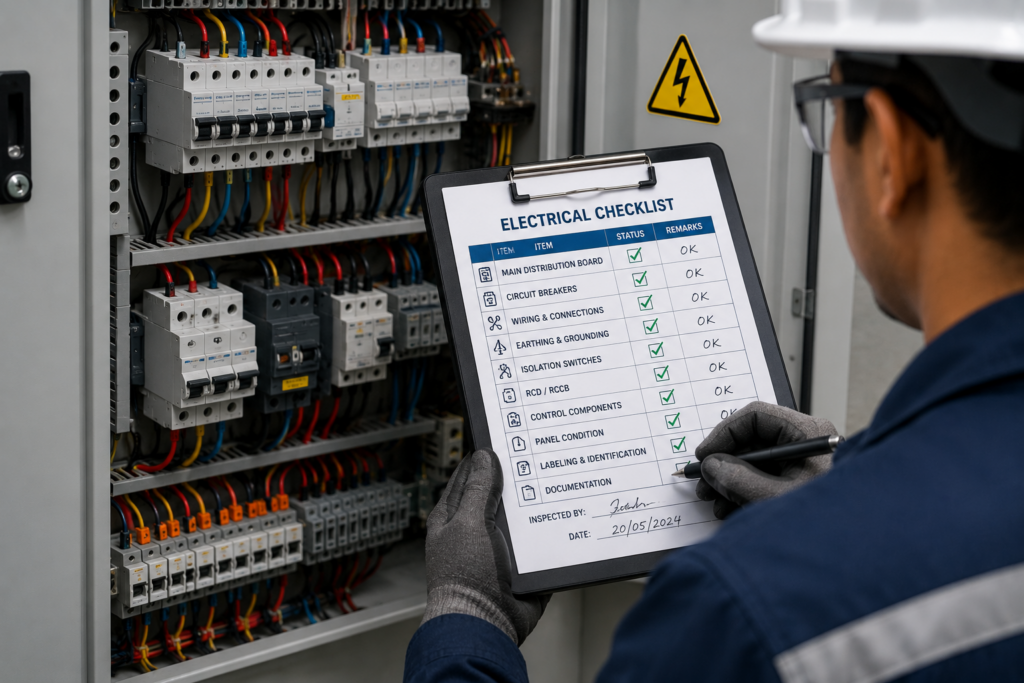
- Keep a dated log of every inspection, repair, and replacement this is the document Qatar Civil Defence and your insurer will ask for first.
Recommended Inspection Frequency
| Task | Frequency |
| Visual panel & switchgear inspection | Monthly |
| GFCI/AFCI test button check | Monthly |
| Emergency lighting 30-second test | Monthly |
| Generator load test | Monthly to quarterly |
| Torque check on critical connections | Quarterly |
| Infrared thermal scan | Annually |
| Full grounding/bonding test | Annually |
| Emergency lighting 90-minute test | Annually |
| Civil Defence compliance documentation review | Annually |
(If your blog template doesn’t render tables well, this can be reformatted as a simple frequency list under each section instead.)
Electrical Inspection Checklist vs. Electrical Safety Checklist: What’s the Difference?
People often use these terms interchangeably, but they answer different questions. An electrical inspection checklist focuses on condition is equipment wearing out, overheating, or out of tolerance? An electrical safety checklist focuses on protection are the devices that prevent shock, fire, and arc flash (GFCIs, grounding, PPE protocols, lockout-tagout) actually functioning? A complete commercial electrical checklist needs both: one tells you what’s failing, the other tells you whether people are protected when it does.
The Cost of Skipping the Checklist
The pattern is consistent across commercial buildings everywhere, and Qatar’s climate only accelerates it: a single loose connection vibrates and heats for months without symptoms, then fails suddenly taking down a switchgear room, displacing tenants, and triggering an insurance investigation that finds no maintenance records on file. The fix is almost always cheaper than the failure: a torque check and a thermal scan cost a fraction of an emergency call-out, let alone a fire claim.
How Graner Helps Building Owners in Qatar Stay Ahead of This
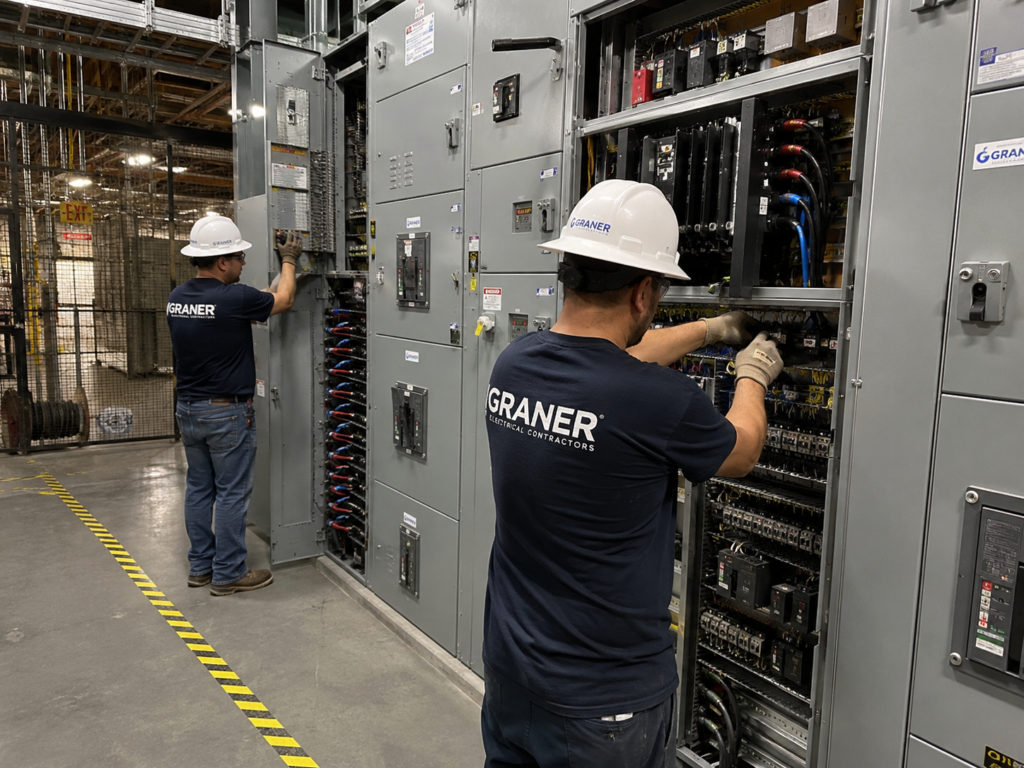
Graner’s facility management and manpower teams carry out structured electrical maintenance across commercial, industrial, and residential towers in Doha from scheduled panel inspections and thermal scans to supplying certified electricians for ongoing annual maintenance contracts. Our teams have run electrical maintenance on projects including tower AMCs, power plant maintenance contracts, and large energy-sector deployments, so the checklist above isn’t theoretical it’s what we run on real sites every week.
If your building doesn’t have a documented electrical checklist in place or it’s been more than a year since your last thermal scan that’s the gap worth closing first.
[CTA Button: Request a Free Electrical Inspection] → link to https://granerqatar.com/contact-us-2/
Frequently Asked Questions
How often should a commercial building’s electrical system be inspected in Qatar? Most commercial buildings need monthly visual checks, quarterly connection torque checks, and at least one full annual inspection that includes infrared thermography and a grounding test. Buildings with heavy HVAC load or 24/7 operations often benefit from quarterly thermal scans instead of annual ones.
Who is responsible for commercial electrical maintenance — the owner or the tenant? In most commercial leases, the building owner or facility management company is responsible for the main distribution system, panels, and life-safety equipment, while tenants are typically responsible for equipment inside their own units. The lease and the Civil Defence compliance certificate should both spell this out clearly.
What does Qatar Civil Defence require for commercial electrical systems? Qatar Civil Defence focuses primarily on life-safety systems tied to electrical infrastructure emergency lighting, fire alarm interlocks, and backup power for evacuation systems and expects documented, dated maintenance records as proof of compliance during inspections.
Can building staff do their own electrical inspection checklist, or does it need a licensed electrician? Basic visual checks (looking for damage, testing GFCI buttons, checking exit lighting) can be done by trained facility staff. Anything involving opening panels, torque-checking connections, thermal scanning, or testing protection devices should be performed by a licensed electrician or a qualified electrical maintenance contractor.
What’s the single most important item on an electrical maintenance checklist? If you can only do one thing, do an annual infrared thermal scan of all panels and switchgear. It catches the loose connections and overheating components responsible for the majority of commercial electrical fires, long before they become visible to the eye.
You can present it professionally like this:
Contact Us
📞 Phone
+974 4436 6836
📍 Office Address
No. 203, 2nd Floor, Barwa Commercial Avenue,
Arkan Gate 23, Doha, Qatar
Visit us: click here