In Qatar, your air conditioner is not a comfort feature. It is survival equipment.
Doha summers regularly push past 45°C, and from May through October, most residential and commercial AC systems run continuously — sometimes 20 hours a day or more. That level of demand puts enormous stress on every component inside your system. Add Qatar’s fine desert dust, the coastal humidity that affects areas like The Pearl, West Bay, and Lusail, and the shamal winds that push sand into outdoor condenser units, and you have conditions that wear AC systems faster than almost anywhere else in the world.
Here is the reality most people discover too late: air conditioners rarely fail without warning. Before a complete breakdown, your system will almost always send you signals sometimes weeks or months in advance. Recognising those signals early is the difference between a straightforward AC servicing job in Qatar and an emergency compressor replacement that costs several times more.
This guide covers the 8 most important warning signs that your AC needs immediate attention in Qatar, what causes each problem, what you can safely check yourself, and exactly when to stop waiting and call a professional
Why AC Problems Are More Serious in Qatar Than in Most Countries
Before getting into the signs, it is important to understand why the stakes are higher here than in a temperate climate.
In a moderate country, a failing AC is an inconvenience. In Qatar during July, it is a health emergency. Indoor temperatures in an unventilated Doha apartment can exceed 35°C within hours of an AC failure. For elderly residents, young children, and anyone with a respiratory or cardiovascular condition, that is a genuine risk.
Beyond safety, Qatar’s continuous AC usage means small problems compound rapidly. A clogged filter that causes minor inefficiency in a system running 6 hours per day causes serious damage in a system running 20. A small refrigerant leak that might go unnoticed for months in a cooler climate will drain your system within weeks of heavy summer use.
This is precisely why AC maintenance in Qatar should never be scheduled only when something goes wrong. Proactive, preventive care before problems develop is the approach that keeps costs manageable and systems reliable throughout Qatar’s demanding summer season.
The 8 Warning Signs Your AC Needs Immediate Repair in Qatar
Sign 1: Your AC Is Running But Blowing Warm or Lukewarm Air
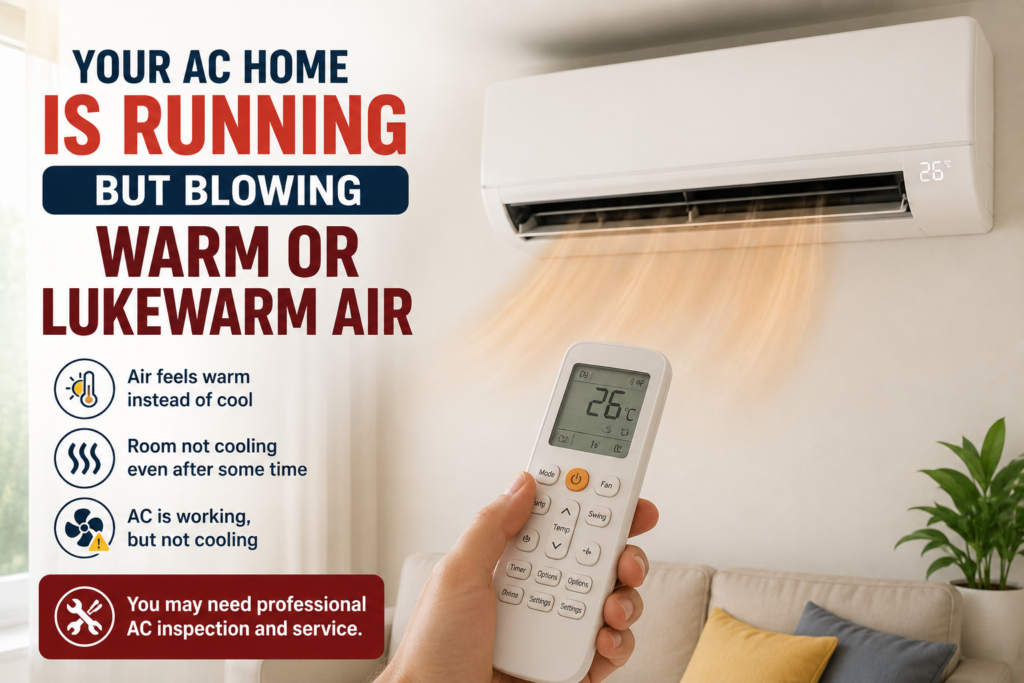
This is the clearest and most urgent sign that something is wrong. Your system is running you can hear it but the air coming through the vents feels warm or only marginally cooler than the room temperature.
In Qatar’s climate this is not a problem you can leave for a week. A system that cannot cool effectively will run continuously trying to reach the thermostat setting, causing every component particularly the compressor to overheat under the extreme ambient temperatures outside. What starts as a refrigerant issue can quickly become compressor failure if ignored.
Common causes in Qatar:
Low or leaking refrigerant is the most frequent culprit in Qatar’s AC systems. Refrigerant lines in older or heavily used systems develop micro-cracks from continuous vibration, thermal expansion and contraction, and the corrosive effect of coastal salt air in areas near the sea. Once refrigerant drops below the correct operating level, the system loses its ability to transfer heat effectively and the air it delivers becomes progressively warmer.
Dirty evaporator coils reduce heat exchange efficiency significantly. Qatar’s fine particulate dust passes through even a moderately clean filter over time and builds a layer on the coils that insulates them from the airflow they need to function correctly.
Compressor problems develop when a system has run undercharged on refrigerant for too long or has experienced repeated overheating cycles. The compressor is the most expensive single component in your AC system, and protecting it is the primary reason to act on early warning signs immediately.
A malfunctioning thermostat reads the wrong room temperature and cuts the cooling cycle short before the space reaches a comfortable level, creating the impression of inadequate cooling even when other components are functioning.
Frozen evaporator coils, caused by severely restricted airflow, block cooling almost entirely and require immediate professional attention to diagnose and resolve.
What you can check yourself: Confirm the unit is in cooling mode, not fan-only. Lower the thermostat setting by at least 5°C below the current room temperature. Wait 15 minutes. If the air is still warm, switch the system off. Running a system that cannot cool properly risks turning a refrigerant recharge into a compressor replacement.
Call for air conditioner repair in Qatar the same day.
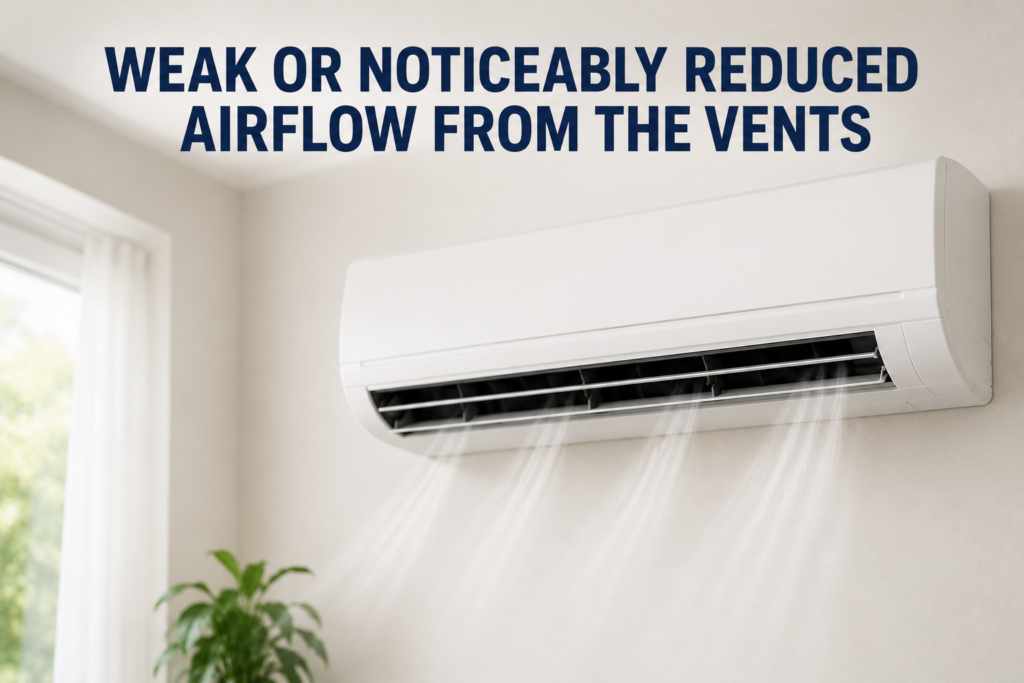
Sign 2: Weak or Noticeably Reduced Airflow From the Vents
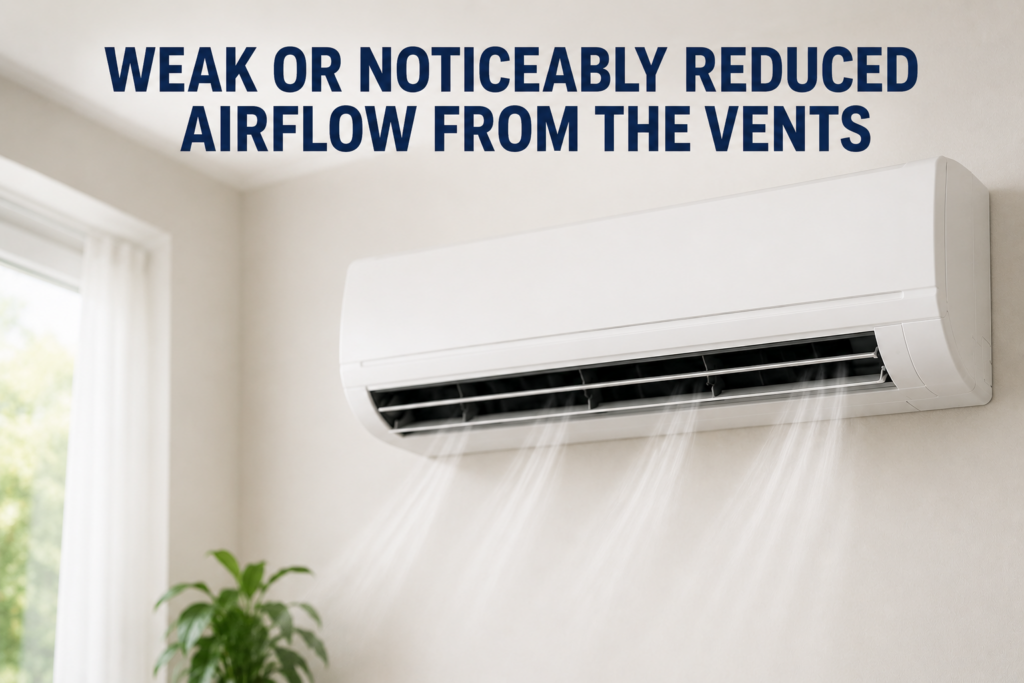
If the air pressure from your vents has dropped compared to six months ago, or if some rooms no longer cool properly while others are fine, your system is struggling to circulate air efficiently across the space.
In Qatar, this problem has one cause that stands above all others: dust. Qatar’s environment particularly during shamal wind events pushes extraordinarily fine particulate matter through outdoor condenser units and gradually through indoor filters. A filter that would last 2 to 3 months in a European climate can become significantly clogged within 3 to 4 weeks during a Doha summer.
When airflow is restricted, the entire system suffers simultaneously. The evaporator coils cannot exchange heat properly. The fan motor works harder and draws more electrical current. Rooms fail to reach the set temperature so the system runs for longer cycles. Every extra hour of operation under restricted airflow accelerates wear on multiple components at once.
Other causes beyond dust:
A fan motor that is beginning to fail produces progressively weaker airflow before it stops entirely. Blocked or leaking ductwork in larger villas or commercial buildings causes dramatic room-to-room cooling inconsistency. Dirty condenser coils on the outdoor unit reduce the system’s ability to release heat, which backs up through the entire refrigerant circuit and compounds indoor airflow problems.
What this means for your KAHRAMAA bill: Weak airflow is one of the fastest routes to higher electricity costs. When your system runs longer to compensate for reduced efficiency, your monthly KAHRAMAA charges climb often noticeably before any other obvious symptom appears to the occupant.
If your system was cooling your space effectively last season and now struggles to reach the same temperature with identical thermostat settings, do not attribute this to the weather. Degraded performance is always a symptom of a developing fault that deserves professional attention from a qualified AC maintenance Qatar contractor.
Sign 3: Unusual Noises Coming From the Indoor or Outdoor Unit
A properly functioning air conditioner produces a consistent, low operational hum. Any new sound that appears or any existing sound that gets progressively louder over days or weeks indicates an internal problem that will not resolve on its own.
What each noise type means:
Buzzing or humming louder than usual typically indicates an electrical issue a failing capacitor, loose electrical connection, or contactor problem. Electrical faults left unaddressed in Qatar’s continuously running systems are not just an AC concern. They are a safety risk.
Continuous clicking during normal operation distinct from the single click when starting or stopping usually points to a failing relay, a thermostat communication fault, or a control board issue requiring professional diagnosis.
Grinding or a metal-scraping sound is among the most serious warning noises your system can produce. It almost always indicates motor bearing wear. In Qatar, where motors run under heavy load and high ambient temperatures for months without meaningful rest, bearing failure can escalate to complete motor burnout very quickly if the system continues operating.
Rattling or clanking suggests loose internal components, debris that has entered the outdoor unit after a dust storm, or a fan blade that has shifted from its correct position and is making contact with the housing.
Hissing particularly from the refrigerant lines strongly suggests a refrigerant leak under pressure. If you hear hissing from your system, switch it off immediately. Refrigerants should only be handled by certified technicians and are not safe to breathe in concentrated amounts in an enclosed space.
Bubbling or gurgling from the refrigerant lines indicates air in the system, typically associated with refrigerant loss that has allowed air to enter the circuit.
If you hear any of these sounds and they do not stop within 24 hours, contact a professional for emergency AC repair in Qatar as soon as possible. Noise problems in AC systems almost universally worsen under continued load they do not resolve themselves.
Sign 4: Water Leaking Around Your Indoor AC Unit
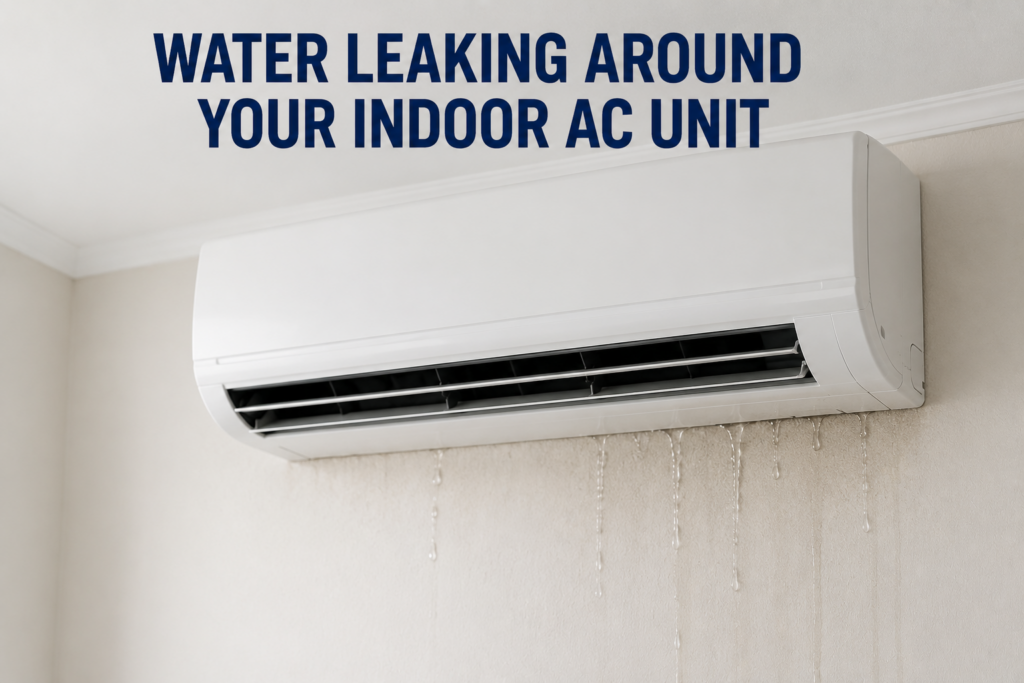
Water pooling beneath your indoor unit, dripping down your wall, or causing ceiling staining is never a normal operating condition. It is always a sign that a specific component has failed and requires immediate professional attention.
Every AC system removes moisture from the air as part of the cooling process. That moisture collects in a drain pan and flows out through a condensate drain line. When that drainage process fails, water has nowhere to go except into your property.
What causes it in Qatar specifically:
Blocked condensate drain lines are the most common cause and are particularly prevalent in Qatar’s environment. Dust, algae, and sediment accumulate in drain lines significantly faster here than in most countries. A partially blocked line causes the drain pan to overflow during periods of high humidity. A fully blocked line causes rapid overflow within hours of the system running.
A cracked or overflowing drain pan often the result of an ageing component that has never been replaced during routine servicing fails to hold condensate even temporarily before leaking.
Frozen evaporator coils create a secondary water problem. When frozen coils thaw which occurs when the system shuts off they release a large volume of water at once, overwhelming the drain system entirely and causing sudden visible leakage.
An incorrect installation angle on a wall-mounted split unit means water does not flow toward the drain outlet correctly and pools inside the unit before spilling outward onto the wall or floor.
Why this requires same-day action: Water from an indoor AC unit in a Qatar apartment or office causes damage that compounds rapidly. Wall insulation becomes saturated. Electrical components within the unit begin to corrode. Flooring and ceiling materials warp and stain permanently. In Qatar’s humid coastal areas, mold can establish itself within 24 to 48 hours of water saturation in walls or ceilings.
If you see active water leakage from your indoor unit, turn the AC off immediately and do not restart it. Call for AC repair Qatar the same day.
Sign 5: Foul or Unusual Smells When the AC Turns On
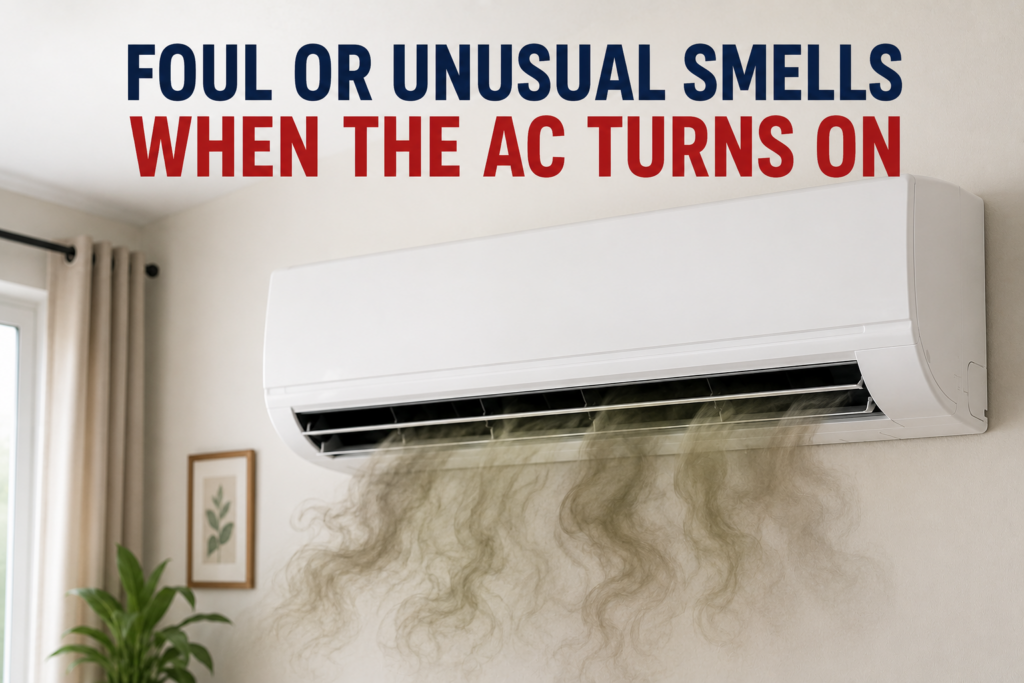
Your air conditioner should deliver clean, neutral-temperature air with no detectable smell. If you notice any odour when your AC turns on regardless of how mild it initially seems the system requires inspection.
What each smell type indicates:
A musty or damp smell is the most frequently reported odour complaint across Qatar’s residential and commercial properties, particularly in coastal areas like The Pearl, West Bay, Al Wakra, and Lusail. It indicates microbial growth — mold, mildew, or bacteria inside the unit. This growth typically occurs on dirty evaporator coils, inside the drain pan, or within ductwork that has not been professionally cleaned. This is not merely an odour problem. Mold spores circulating through your indoor air carry real health consequences, particularly for children, elderly occupants, and anyone with asthma or respiratory conditions. This requires a professional deep clean a filter change alone will not address mold established on the coils or inside the drain pan.
A burning or electrical smell is the most serious odour your system can produce. It can indicate an overheating motor, burning wire insulation, or a capacitor that is beginning to fail. If you smell burning from your AC, switch it off immediately and do not restart it until a technician has physically inspected all electrical components.
A sharp or chemical smell suggests refrigerant leakage. Refrigerants have a distinctive chemical odour. This requires immediate professional attention both for system performance and for the health of occupants in the space.
A stale or dusty smell when first turning the system on after a period of non-use typically resolves within the first few minutes of operation. If it persists, it indicates heavily soiled coils or filters circulating dust and debris continuously through your indoor air.
Sign 6: Your KAHRAMAA Electricity Bill Has Increased Without Explanation
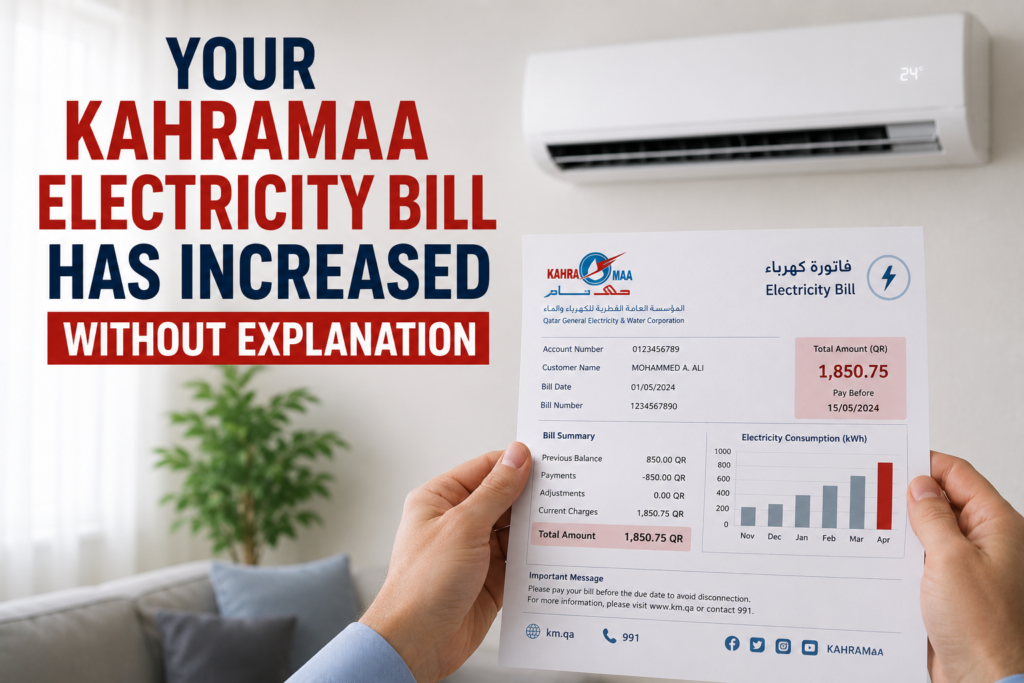
This is frequently the first sign that something is wrong appearing before any noticeable performance issue develops in the cooled space itself. If your thermostat settings, occupancy, and usage habits have remained consistent but your KAHRAMAA bill has risen significantly, your AC system is almost certainly responsible.
In Qatar, AC systems account for approximately 60 to 70% of total residential electricity consumption during summer months. This concentration of consumption means that even a modest drop in AC efficiency translates directly into a meaningful and immediate increase in your monthly bill.
Why efficiency drops before other symptoms become obvious:
Dirty evaporator and condenser coils force the system to run longer cycles to achieve the same cooling output. A layer of dust just a few millimetres thick on the coils can reduce heat exchange efficiency by 20 to 30%, which registers immediately in electricity consumption before the occupant notices any room temperature change.
A refrigerant level that is slightly low not yet low enough to produce obviously warm air, but below the correct operating charge makes the compressor work significantly harder to move the same amount of heat through the system. The compressor is the single highest-consumption component in any AC unit.
A fan motor that is beginning to fail draws progressively more current as mechanical resistance increases, even before the reduction in airflow becomes noticeable to occupants.
Air leaks in ductwork cause conditioned air to be lost into wall cavities or ceiling spaces before reaching the rooms being cooled, forcing longer run times to compensate for the loss.
Treat a rising KAHRAMAA bill as a diagnostic signal and schedule AC servicing in Qatar to identify the efficiency loss before it becomes a more serious and expensive fault. In most cases, a professional service including coil cleaning, refrigerant verification, and airflow optimisation pays for itself within one to two months through the resulting reduction in electricity consumption alone.
Sign 7: Your AC Turns On and Off Every Few Minutes
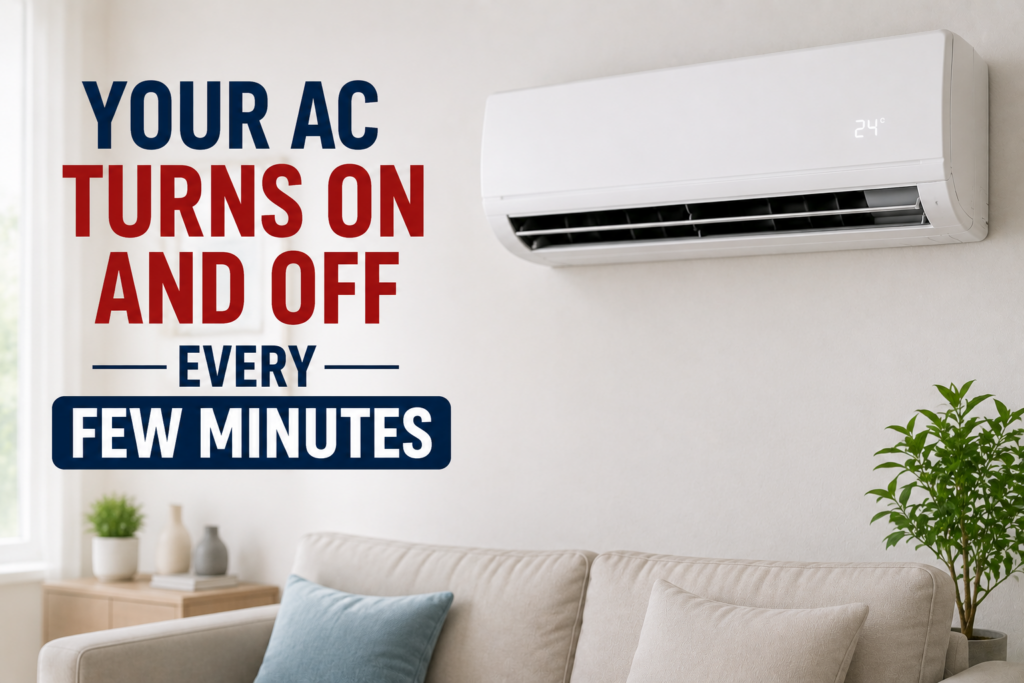
A properly functioning AC system completes cooling cycles of roughly 15 to 20 minutes, reaches the set temperature, switches off, then restarts when the room temperature rises again. If your system is turning on and off every 2 to 5 minutes without properly cooling the space, this is called short cycling and it is one of the most mechanically damaging operational patterns an AC system can develop.
Every compressor start draws a large surge of electrical current and creates significant mechanical stress on internal components. A system short cycling 15 to 20 times per hour experiences wear equivalent to a properly functioning system running continuously all day. This dramatically shortens compressor lifespan and compressor replacement is consistently the most expensive single repair in any AC system.
Common causes specific to Qatar:
An overheating compressor is a particularly relevant cause for Qatar properties where outdoor condenser units are installed on rooftops or building walls in direct, unshaded sun. When the compressor exceeds its safe operating temperature, it triggers its own thermal protection cutoff and shuts down repeatedly. This is a serious condition that can cause permanent damage if the system continues to operate without addressing the root cause.
Thermostat malfunction causes the system to receive incorrect temperature readings, triggering premature shutoff and immediate restart cycles that accomplish no meaningful cooling of the space.
Severely dirty air filters that restrict airflow trigger pressure safety cutoffs within the refrigerant circuit, causing repeated shutdowns before a proper cooling cycle completes.
Refrigerant loss causes the system to reach abnormal high-pressure limits quickly, triggering safety shutoff before the space is adequately cooled.
An oversized AC unit for the space common in buildings where HVAC was not properly engineered for the room dimensions cools the space too quickly, shuts off, allows the temperature to rise, and restarts within minutes in a continuous inefficient cycle.
If you notice your system cycling on and off unusually frequently, stop running it and call for AC repair Qatar before the compressor sustains permanent damage.
Sign 8: Ice or Frost Forming on Your AC Unit
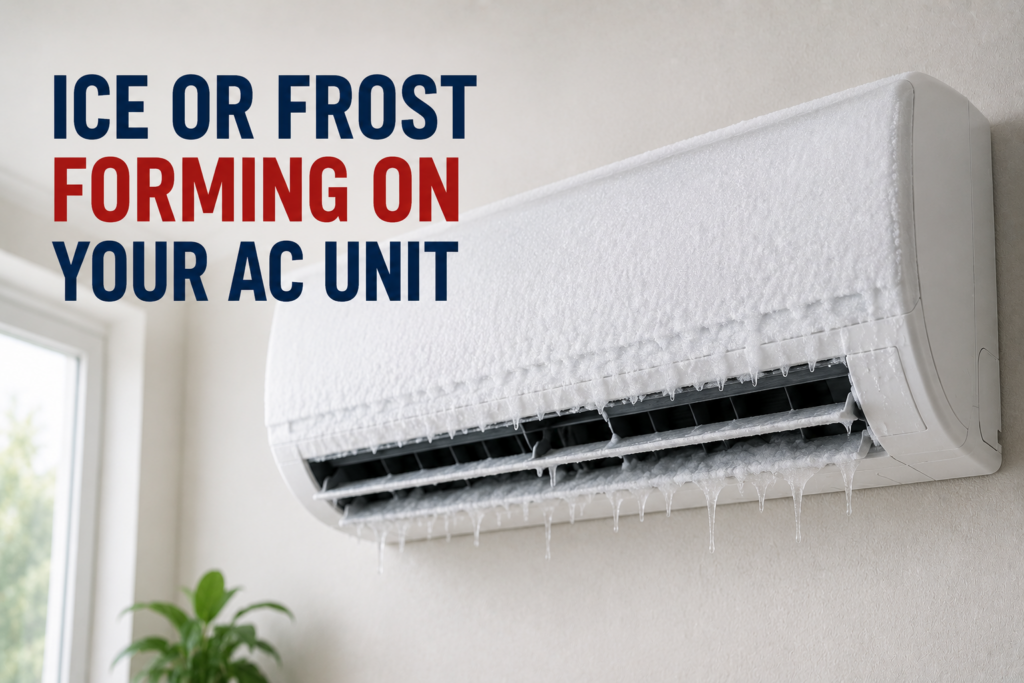
This is the warning sign that surprises most people: an air conditioner developing ice is not performing better it is failing. Frost or ice forming on the evaporator coils, the copper refrigerant lines, or anywhere visible on the unit is a clear sign of a specific diagnosable fault that requires immediate attention.
Your evaporator coil operates at a low temperature to absorb heat from the room’s air. For this process to work correctly, warm room air must flow continuously over the coil surface. When that warm airflow is interrupted or when refrigerant levels fall too low the coils drop below freezing and the moisture in the surrounding air freezes onto their surface.
Why it happens in Qatar:
Severely clogged filters or blocked return air vents are the most common cause. Without sufficient warm airflow crossing the coil surface, the coils simply freeze. In Qatar’s dusty environment, where filters can clog faster than residents expect, this can develop within a single season without professional servicing.
Low refrigerant changes the pressure and temperature profile inside the evaporator coil, causing it to operate at an abnormally low temperature that freezes ambient moisture regardless of how much airflow is present.
Why you must not run a frozen system: A frozen coil will eventually block airflow completely and stop all cooling. When the ice melts typically when the system shuts off it releases a large volume of water at once, often causing the leakage problem described in Sign 4. Running a system with frozen coils also places severe abnormal strain on the compressor.
If you see ice or frost anywhere on your AC unit, switch the system off immediately. Allow it to defrost completely typically 2 to 4 hours. Do not restart it. Call for emergency AC repair in Qatar before switching the system back on.
When to Call for Emergency AC Repair in Qatar — Today, Not Tomorrow
Call for emergency AC repair in Qatar immediately if any of the following apply:
Water is actively dripping from your indoor unit onto flooring, running down a wall, or causing visible ceiling staining.
You smell burning or any electrical odour from any part of the AC system.
You can see ice or frost forming on the indoor unit or refrigerant pipes.
Your AC has completely stopped producing cooled air during peak summer heat with outdoor temperatures above 42°C.
You hear grinding, loud banging, or high-pitched screeching from the compressor or fan unit.
The system trips your circuit breaker when it attempts to start.
In any of these situations, continuing to run the system risks turning a repairable fault into a complete system failure requiring full replacement rather than repair. Contact Graner Electromechanical Contractors immediately.
Preventive AC Maintenance in Qatar: Habits That Save You Money Year After Year
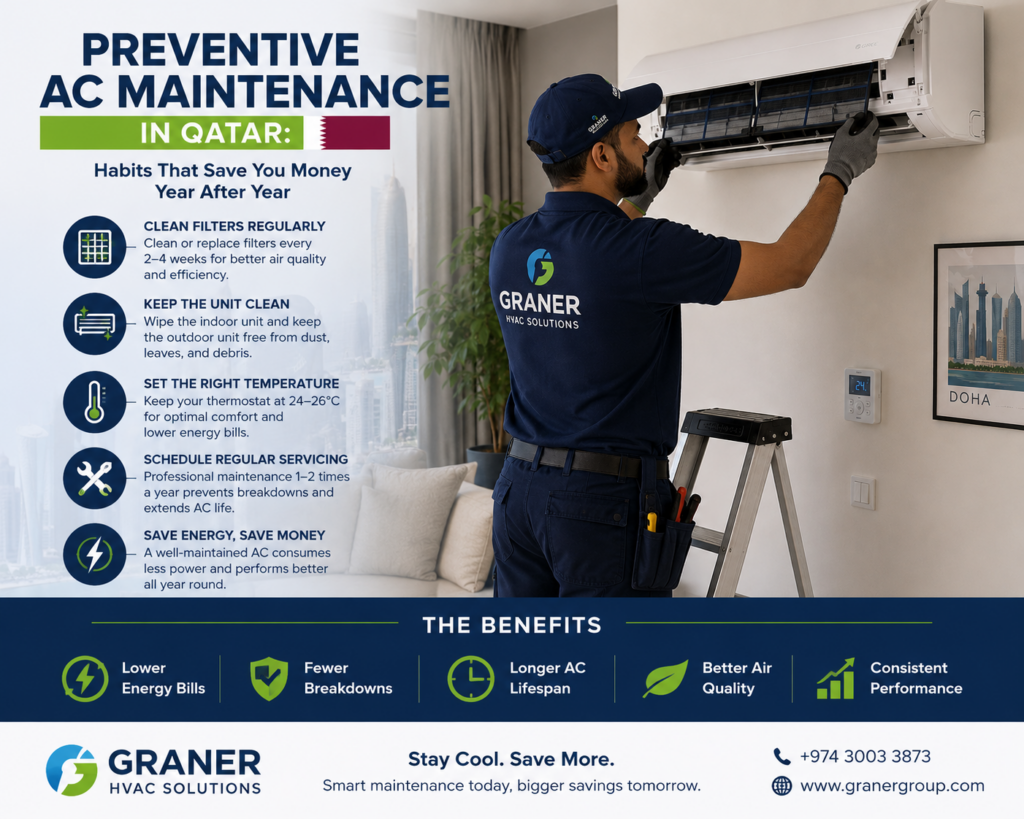
The most cost-effective approach to AC ownership in Qatar is preventing problems before they develop. These are the habits that make the biggest practical difference:
Clean or check your filters every 3 to 4 weeks during summer. In Qatar’s particulate environment this is not the same guidance as in other countries. Filters that would last 2 to 3 months in a moderate climate can become significantly clogged within 3 to 4 weeks during Doha’s peak season. A clean filter is the single most impactful thing an occupant can do between professional service visits.
Schedule professional AC maintenance Qatar twice per year. The optimal timing is April to May before the summer peak begins, and October to November after the heavy-use period ends. A professional service covers coil deep cleaning, refrigerant level verification, condensate drain line flushing, electrical component inspection, and full fan and motor assessment all tasks that go far beyond what a filter replacement accomplishes on its own.
Keep your outdoor condenser unit clear. Condenser units require at least 50 centimetres of unobstructed clearance on all sides for adequate heat dissipation. After shamal dust storms, check specifically for sand accumulation blocking the condenser fins. A partially blocked outdoor unit cannot release heat effectively and drives up both electricity consumption and compressor wear simultaneously.
Avoid extreme thermostat settings. Setting your thermostat to 16 or 17°C when it is 46°C outside forces your system to work far harder than necessary and accelerates wear across all components. A setting of 22 to 24°C is both comfortable for occupants and significantly less demanding on the system over a long summer season.
Monitor your KAHRAMAA consumption month over month. An unexplained rise in electricity use during summer is often the earliest detectable indicator of a developing AC efficiency problem appearing before any obvious performance symptom manifests in the cooled space itself.
Frequently Asked Questions About AC Repair in Qatar
What are the most common signs that an AC needs repair in Qatar? The most common signs are the AC blowing warm or lukewarm air, noticeably reduced airflow from vents, unusual noises during operation, water leaking from the indoor unit, unpleasant odours when the system runs, a sudden unexplained increase in the KAHRAMAA electricity bill, and the system turning on and off every few minutes. Any one of these signs warrants a professional inspection before the fault develops further.
How much does AC repair cost in Qatar? Costs depend on the specific fault. Basic filter cleaning and servicing typically starts from QAR 100 to 200 per unit. A refrigerant recharge ranges from approximately QAR 150 to 400 depending on the refrigerant type and volume required. Electrical component repairs such as capacitor or thermostat replacement range from QAR 200 to 500. Compressor replacement is significantly more expensive, which is the primary reason why addressing early warning signs before they escalate is consistently more economical.
How often should AC maintenance be scheduled in Qatar? Given Qatar’s climate and continuous summer usage, professional AC maintenance should be scheduled at least twice per year once before the summer peak in April or May, and once after the heavy-use period ends in October or November. Air filters should be inspected and cleaned every 3 to 4 weeks throughout the summer months.
What causes refrigerant leaks in Qatar AC systems? Refrigerant leaks are most commonly caused by corrosion in copper refrigerant lines, which is accelerated by Qatar’s coastal humidity and salt air particularly in areas including The Pearl, West Bay, Lusail, Al Wakra, and Dukhan. Vibration wear at connection joints over years of heavy use and physical damage during previous servicing are also frequent causes. Refrigerant handling is restricted to licensed HVAC technicians only.
Is it worth repairing an old AC in Qatar or better to replace it? If your system is over 10 to 12 years old and requires a major repair such as compressor replacement, replacement is often more economical when the full calculation is made. Modern AC systems are substantially more energy-efficient in Qatar’s high-consumption environment, the reduction in KAHRAMAA costs can offset the cost of a new unit within 2 to 3 years. Graner handles the complete supply, installation, and commissioning of new AC units across Qatar if replacement is the right decision for your situation.
What should I do if my AC stops working completely in Qatar summer? Check the thermostat settings and confirm the unit is in cooling mode. Check the circuit breaker to confirm the electrical supply has not tripped. If the system still does not start or produces no cooled air, switch it off and call for emergency AC repair in Qatar immediately. In peak summer heat, a completely non-functional AC in a closed apartment or office is a health risk that requires same-day professional response.
How do I choose a reliable AC repair contractor in Qatar? Look for a contractor with verifiable project experience in Qatar not just general HVAC knowledge. Ask specifically about experience with the type and brand of system you have, their process for diagnosing faults before quoting for parts, and whether they provide a service guarantee on work completed. Graner Electromechanical Contractors has delivered HVAC maintenance contracts across residential towers, commercial facilities, and industrial projects throughout Qatar.
Why Qatar Properties Choose Graner for AC Repair and HVAC Maintenance
Graner Electromechanical Contractors is a Doha-based MEP engineering and electromechanical contracting company. Our project experience spans residential apartment buildings, commercial towers, industrial facilities, and government-affiliated infrastructure projects across Qatar.
Our HVAC maintenance services cover the complete scope of what a Qatar AC system requires — preventive and corrective maintenance, refrigerant handling and recharge, evaporator and condenser coil deep cleaning, condensate drain line servicing, electrical and control component inspection, and full system fault diagnosis.
For buildings and facilities requiring integrated care across all systems, we provide building and tower facility management services that include HVAC within a comprehensive annual maintenance contract — a single point of accountability for everything your property needs.
For properties where the system is beyond economical repair, we handle the complete supply, installation, and commissioning of new split and window AC units across Qatar, from single apartments to full commercial building installations.
Our completed project portfolio includes HVAC annual maintenance contracts for the Dukhan Tower and multiple residential apartment buildings across Doha, full HVAC system supply and installation for commercial showrooms, and ongoing HVAC and electrical support for Qatar Energy supply chain projects through clients including DANWAY and BMJV.
Book Your AC Repair or Maintenance Service in Qatar Today
If your AC system is showing any of the signs described in this guide or if you have not had a professional service in the past 6 months the right time to act is now, before peak summer puts your system under maximum stress.
 Call Graner: +974 44366836
 Office Address:
No. 203, Barwa Commercial Avenue,
Arkan Gate 23, 2nd Floor,
Doha, Qatar